I suggest you visit his site and give it a whirl. Here goes:
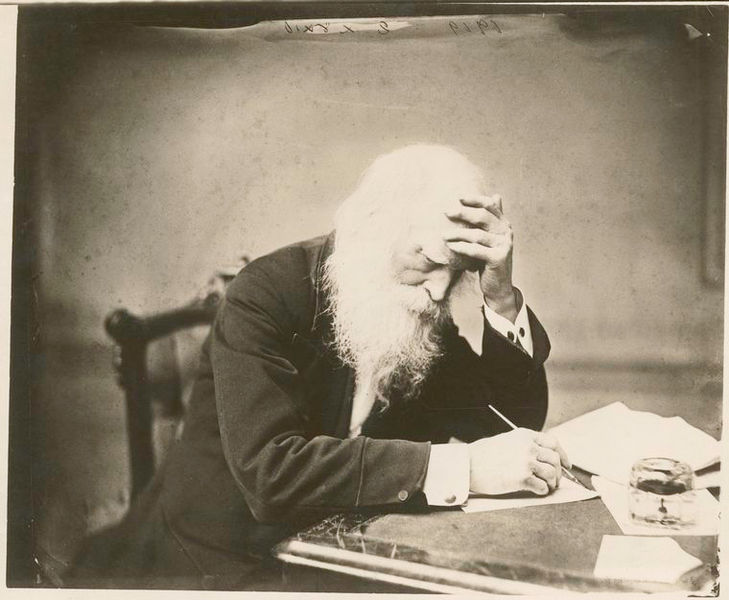
He prowls with shoulders rolled backward, craning his neck forward, revealing wild brown eyes. His chest is puffed out and his nostrils flared like a bull ready to charge. His handshake would leave fingers numb for hours and combined with a piercing venomous stare, causes the bravest man to wilt.
On Wednesday I put a post together about compelling stories. The question and the survey asked what makes a good story good? Or better yet, what keeps you reading after the first few pages of a book?
There were some great responses and comments I have yet to get to (sorry) but the results showed that there are many elements that will cause readers to read, but Josh Mosey my good friend listed characters as his main story driver. He even decided to make a contest out of it. You can read the details about the contest and enter here. Entering contests like this might be a simple comment or the creation of a character that will spark a novel!
You can participate in the poll here. I appreciate your feedback.
Verbs are the precious jewels of writers everywhere. It does not matter if the writer composes poetry, hacks away at a novel, or spills out memoirs. If verbs are employed correctly, they leave a resounding impression that lingers long after the page is turned and the book is closed.
So as writers, what are the best ways to utilize these beauties?
Today I would like to relay a few examples to help you safely avoid the passive voice. Many writers struggle with this and I write this post for myself just as much as my audience. Sometimes it takes going over a subject multiple times in order to get it right. Like for instance, writing a blog post about it.
He thoughted, no he was thinking, no thoughting? Hmm.
The difference between active and passive verbs – Verbs tell us who receives the action in a sentence. It can also help the characters stand out instead of disappearing to the side of the action. See the example below:
The foul ball was snagged by Johnny.
Johnny snagged the foul ball.
Both of these are grammatically correct, but in the first sentence the ball appears to be the subject even though we want Johnny to be the center of attention.
There are many ways to be direct when using verbs to keep the action churning. For instance, try cutting a sentence in two:
Hailea was following Kellen when a brigade on horseback galloped past.
Hailea followed Kellen. A brigade on horseback galloped past.
Passive voice can be appropriate in certain situations. For instance if your character must take a step aside to relay some of the setting:
While most farmers turned in for the evening, a few in the distance were finishing their plots.
If the passive voice is not your kryptonite, search for something that is. This way when you engage an agent and they accept your novel, you don’t have to hire a professional editor. Mastering your writing weakness could go a long way to realizing your publishing dreams.
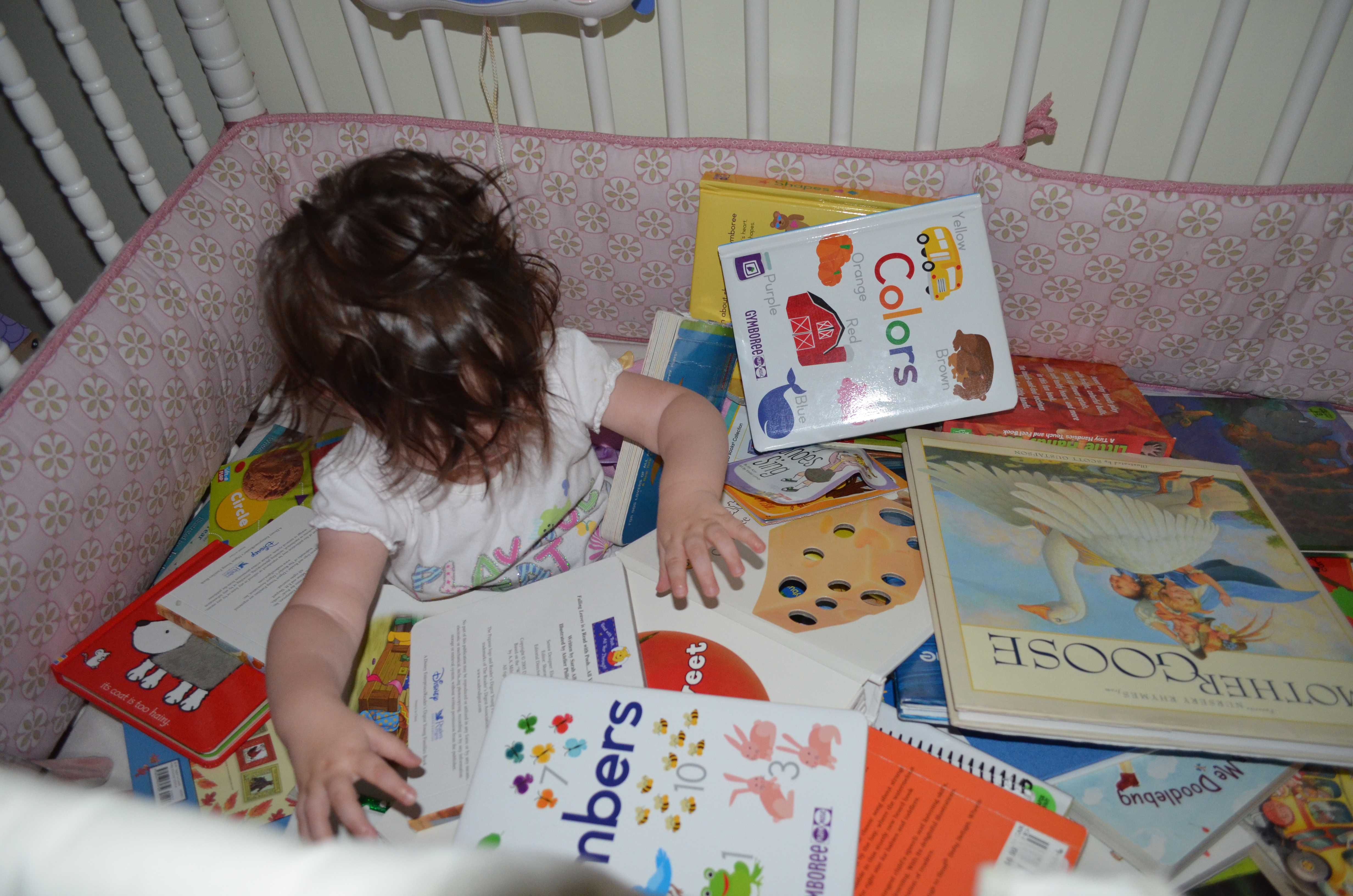
My daughter June loves books. When she first started walking, her favorite book was Jules Verne’s From the Earth to the Moon. I know this because she kept swiping it off the shelf and biting it.
Now as she is older, she likes to take them off the shelf and distribute them about the house. Sometimes she puts them in our bed. Every night she has at least a dozen scattered across her as she sleeps when I go to check on her before bed.
Earlier this week my wife and I moved our youngest daughter Clara into June’s room. Clara is almost eleven months old and they get along fairly well. I also believe Clara will share the same passion, as you can see it clearly displayed below. Okay, her sister might have helped.
Characters in novels are not usually boring. However, if you are writing your first novel you might find yours to be dull. I’ve been writing for a while now and realize believable and lively characters are key for a good book, no matter what the story is about.
The idea from this post came from a conversation my wife and I had with a neighbor. She and her daughter invited us to their house for a party. We’re new to the neighborhood and some people have been here for forty plus years. Our neighbor who is throwing the party said she invites every one every year. She told us that she invites a neighbor four doors down from her and each year he says “you cut down my trees”, then shuts the door.
You see, she lives in a row of houses built sixteen years ago and they mowed down his view of the forest to do it. That got me thinking, he could be a great neighbor in a story.
Here are ten places you might find characters. Although don’t be too odd and stare at the poor person forever. It might be a comment or a brief interaction, but characters are everywhere. Obviously, tread lightly when doing this and never use a character to insult someone. We all have our subtleties of personality that could propel a story.
Family
Friends
Work
Supermarket
Gas Station
Restaurant
Neighborhood
Church
Books
Movies/Television
If you are struggling to find the right character, pay attention to them in your daily life and the media you consume. I am sure they will pop up somewhere.
The prompt for this week at Julia’s place is titled Legacy. It does not have to contain the word, but needs to be about the theme of legacy. Below you will find mine. I dedicate it to my Grandma Evenhouse.
My grandmother passed nearly two years ago. Even at the end she remained very sharp and waited until my brother flew in from Florida to depart this world.
I write this because she always encouraged me in my writing. Every time I saw her she asked me how things were. One Christmas she gave me a little notebook because she said I reminded her of my grandfather who had passed a few years before.
If she were here now I would introduce her to my daughter Clara and proudly tell her they share the same middle name: Mae.
Here is a post by my friend Josh. It might be a bit shameless to reblog it because he referenced me, but this is something I struggled with for quite some time. There were parts of my book (and still are more) that I needed to kill. I liked them, slaved over them, but they were like a stray note in an orchestra. They just had to be weeded out. I think this is what Hemingway was talking about when he talked about a brave and true story.
Cheers,
Bob
Twice this week, and for the first time ever, I have run across the phrase “kill your darlings”. Apparently, this is a common phrase in the writing world and I show my ignorance by not knowing it.
The first time I heard it, I was writing with my buddy Bob and trying to bend this week’s 100 word story to my will, but I couldn’t get it to work. I knew the story that I wanted to tell, but I was having trouble fitting it into the allotted word count. I asked Bob for help and told him that I needed more words to achieve the effect that I wanted.
“What about changing your first sentence?” he asked. “It’s pretty wordy.”
“But I like my first sentence,” I said.
“Kill your darlings, Josh,” he said.
In the end, I rewrote pretty much the whole thing.
I put a post about this word challenge on my blog last week without much of an introduction. This post is an entry in a writing contest at Julia’s Place called the 100 word challenge. It is a wonderful way to hone your skills, be choosey in your word selection, and try to be compelling in a brief amount of space. It’s sort of like tweeting a story or a writing sprint.
Titled: Don’t Be Like This Guy
Dirk put the phone down wondering if he was jeopardizing his chances of landing an agent.
He’d been calling all day asking for Mrs. Swenson of Swenson Agency Limited. However, she did not return his calls nor did Veronica her assistant. He wondered if Veronica was actually taking his messages because he could hear her drumming her fingers along the desk, especially after the sixth call.
But this is what being an author is about, right? You have to do this to get published, don’t you?
So, Dirk pick up the phone, breathed a heavy sigh, and dialed again wondering, would seven prove to be too much?
Last week I said I had something important coming up this week. It was yesterday, my meeting with agent Ann Byle of Credo Communications.
That was a day that I had been waiting for my entire writing career: The opportunity to talk with some one professionally about my novel. It was more encouraging that I could have imagined.
My novel is high adventure fantasy and I was not sure how that would be received as their publishing house is not known for that genre. However, after talking with her she asked for chapters and said she’d read them.
I don’t know where this will go. But I am thrilled to get this chance and will keep you all informed. As our meeting came to an end I asked Ann what I should be doing to promote myself now. Here are five things she recommended I do:
Get a website
Join a Fantasy Writers of America group or something similar
Outline all seven books of my series so I could pitch the series to a publisher
Think about endorsers and who I would want them to be
develop a marketing plan
Now, a lot of these items are not exactly the most fun things to do. Writers write, don’t they? Yes, but successful ones promote, advertise, and otherwise market themselves and their book.
The writing part is not over, but I am beginning to think that getting a book published is 1/3 writing and 2/3 marketing, promoting, and speaking.






 PART-TIME NOVEL