How I Plan To Edit My Novel

After I finish my book proposal (more on that tomorrow) I plan to get back to making my novel better. Some might think this is backwards, but there are things I’d like to clean up as I wait patiently (all to eagerly perhaps) for that form rejection letter.

When taking gravity, mathematics, and the concreteness of reality out of the way, there are about a billion ways to do just about anything. Here is my bumpy  and unproven road towards a cleaner fourth draft.

Step 1: Create Small Goals

When I look back on my novel there is a lot of work to be done. But I plan to approach these corrections and tackle them like I remodeled me house, one room at a time. If I were to read through for grammar, characterization, plot, and other errors simultaneously, I would immediately become overwhelmed by the plethora of mistakes. So I plan to read my novel several times to sweep over each one. Also, I will to do a simple read through taking notes first, before I do any hacking and whacking to my manuscript.

Step 2: Create A Plan

Not only can the writer/editor become overwhelmed with the mistakes that have been made on an early draft of a novel, but it can be nerve racking knowing just where to begin. I plan to print of my manuscript three chapters at a time and each night before I go to bed, simply read through 5-10 pages. 400+ pages can be a lot of work, but if I were to get on a role and finish 10 pages a day for a week, there’s 70 pages right there. And that’s not to mention lunch breaks at work and the occasional morning where I might have the energy to get up and knock out 5-10 pages.

Step 3: Identify Areas of Improvement

As I do my casual read through, while scratching some notes, I plan to identify areas of improvement. For instance, if I have inaccurate descriptions, if I forget a character completely, if a whole scene needs to be rewritten, a new scene added, or, as William Faulkner say if he were standing over my shoulder, if that little darling part needs to be killed.

Again, as I said at the beginning this is not a sure-fire way to edit. I don’t think there is. I think there are formulas we can use that might help, but it is what fits the writer best. The most important thing for me is figure out a system that works, and to do it.

One word at a time.

Cheers,

Bob

The Healthy Writer

I walked through the doors of the local Tim Horton’s to meet my friend Josh for a night of writing bliss. Before I even sat down, or even said a word, he glanced up at me then looking taken aback.

“You got sleep last night didn’t you?” He asked. I nodded affirmatively.

Probably not the appropriate amount of sleep

I moved three weeks ago. My daughters were not sleeping (and still aren’t) for a variety of reasons, and I was spent on house projects, and lack of sleep. Through all of this I barely wrote. I ate terrible food, (insert your fast food kryptonite here) did not exercise (I was sanding wood floors and redoing my kitchen, however) and slept little.

Which brings me back to Josh’s comment at the beginning of the post. That night I wrote well. I put in eight hundred words on my novel, and when I reviewed them the next day they were better than I expected. This made me stop and think.

What would happen to my writing if I slept well all of the time? What would happen if I was a healthy writer?

I am not a health nut. I am not a person who obsesses over portion sizes and calories. But I can tell the difference in my body when I eat junk for a while and when I eat fresh produce and drink the proper amount of water. I don’t have caffeine head aches. I don’t have an upset stomach.

What would happen to my writing if I ate well all of the time? How would that impact my writing?

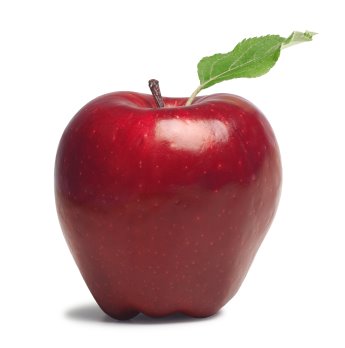
an Apple a day…

A month ago I ran a 5K race. It was very satisfying. I believe that the struggle of a sport or 5K builds motivation in other areas of life. Also, running, while sounding torturous, can be fun. It also gives me time to collect my thoughts and not be distracted, providing a great opportunity to mull over a particular part of my story.

What would happen to my writing if I exercised regularly?

These three things are not imperative to the writer. But, I believe being healthy may help me be a better writer. The master sleuth lived on opium and liquor, and the occasional embalming fluid. I wonder how he would have functioned had he ate fresh vegetables and got the proper amount of sleep?

Cheers,

Bob

Show Me the Story! – Writing Tips

Show don’t tell.

There are things in life that need to be chewed on for some time before the light bulb comes on and we enter the realm of understanding. Showing and not telling is one of the things that took a while for me to understand. Since the light bulb has come on, my writing has not been the same.

But what does this mean? Let me give you an example.

“Charlie was furious”.

This is a line you might come across in your own writing, or at least phrases like this. These phrases describe a scene, but fall unequivocally short of painting what is happening inside the character. This tells what has happened – Charlie was furious. This does not allow us to get to know the character to advance the story. Albeit, it might be a justifiable fury, but in the end if falls short to enrapture the reader in the tale you are in the process of spinning.

So, how do you show something without telling it? Glad you asked. Let’s revisit Charlie in the “furious” scene.

Charlie ran as fast as he could after Harry, but the older boy was much faster and was soon out of sight, cackling as he sprinted over the hill. Charlie punched his fist. He roared and raged kicking the dirt and screamed obscenities which echoed across the green glen.

Here, we are not sure what happened to evoke such anger, but the action is what pulls us in. The action of punching, screaming, kicking, and the echoing obscenities. Whatever it was, it made Charlie furious. But I didn’t say that now did I?

I hope you found this brief tip and example helpful.

I also hope you have time to enter your writer’s world this weekend.

Keep writing my friends.

Three Benefits of Writing to a Schedule

While I finish a week of banishment from the internet, a result of my recent move, my friend Josh has graciously agreed to write a guest blog on Parttimenovel.

Josh is a fellow member of my Weaklings writer’s group who is in pursuit of publication. I hope you find this post insightful. I know I did, as I also listened to Andrew’s presentation at Baker Book Store and was inspired to start a blog. Please visit their blogs at Josh Mosey Writer and Tell Better Stories.

* * * * * * * * * * * * * * * * * * * * * * * * * * * * * * * * * * * * * * * * * * * * * *

My good friend Bob Evenhouse was the one who inspired me to start my blog, but it was another Weakling  who gave me some helpful tips about how to actually do it.

A while back, I had the pleasure of co-leading a seminar at the Breathe Writer’s Conference with my friend and former co-worker, Andrew Rogers. Andrew and I met through working at my bookstore, but it wasn’t long before his talents were stolen away by local (yet global) publisher, Zondervan. The session we led at the writer’s conference was titled something like “Marketing 101: What bookstores and publishers want from authors”. It was supposed to be an hour long session with the last 15 minutes reserved for questions. We were each going to take a few minutes to introduce ourselves and our platforms and then speak for about 20 minutes on our individual subjects. Much of what I said, I’ve included in my Bookstore Symbiosis posts, but Andrew talked about online marketing tools and the author’s brand and other cool things. By the time he was done, people didn’t want to wait for the appropriate Q&A time and I ended up with about 10 minutes to go through my presentation. But I wished he would have continued without having to stop for me. It was so good.

Among the things he said was one nugget that stuck with me, even though it would be a few years before I started my own blog. He said that when just starting out, write to a schedule. Make a plan for your posts and stick with it. My personal blog schedule started out like this: Monday – Autobiographical, Tuesday – Character feature from one of my novels, Wednesday – Book Review, Thursday – Writing Tips or Inspiration, Friday – Links and Report Card, Saturday and Sunday – Relax.

When I scheduled my posts like this, my previous concerns about starting a blog and then not having anything to say proved to be unfounded. All I had to do was come up with a post that fit the theme of that day. With a little direction, I had no trouble coming up with content. So the first benefit is always having a prompt.

Another thing I noticed with my post schedule was that I was allowing myself a variety of ways to relate to other people. By choosing a different prompt each day, I could allow people to see something about my past, my writing, my taste in books, and what I found interesting enough to link to. I was allowed to be well-rounded.

Last, by having a schedule, I forced myself to be consistent in my posting. In blogging, I’ve found that sporadic posts mean a low readership. It is difficult for people to build reading your blog into their routine when they have no idea when to expect a new post from you. And if you decide to post a whole string of posts in one day, there’s a good chance that your followers won’t follow for long since no one likes being force-fed for long. It doesn’t matter as much whether you post daily or once a week, as long as people know what to expect. By setting a schedule, you’ll know what to expect of yourself, and your readers will know what they have to look forward to.

Thanks for reading!

Short Story: The Finest Prose Form?

I started several short stories and have yet to finish one. My excuse is that my stories are too big. The true reason, one that I hesitate to acknowledge at times, is that my writing is unrefined.

Short stories are an enigma. I cannot remember the last time I read one, but they stand as an important bulwark of the prose continuum. When the remodeling project is done at my new house (yes, I understand I might never be done remodeling!)  I plan to sit down and try to finish a few. Why? Because it is a wonderful way to improve your writing. You have to be choosey with your words. You cannot simply throw some dialogue here and some description there for as many pages as you well please.You have to limit yourself. Therein lies the challenge.

As there are more remodeling projects to get to today, I will leave you with a few thoughts from the experts. Their analogies prove closer to the mark than my feeble ones ever could.

Keep writing my friends.

Cheers,

Bob

Are The Characters In Your Novel Bored?

When I write, I like to put myself in the shoes of my characters. I like to imagine the way they would react to circumstances that arise. I do this for two reasons. First, because I want to display the surroundings and situations as vividly as possible, and second, because I want to be sure that the story is interesting to them so they are intrigued and want to venture further down the rabbit hole I’ve created.

I am reading a book, which shall remain nameless, where I believe the characters are bored. They are trying to solve a mystery, and each one of their fates are tied to it. They are also competing, though he is unaware of it, with the director of an orphanage. It sounds interesting, but once they are on the path of solving the mystery, the characters meet every day at an appointed time to try to solve it. This goes on for about three hundred pages, until a new idea comes to them. Yikes.

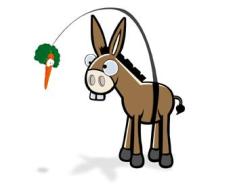
Get that carrot!

If you know me, I can be picky. I get easily bored with a novel. I want mystery, I want pace, and I want subplots.I don’t like to read a “filler” chapter. (This is a chapter on back story, a new character’s perspective that does not pertain to the plot, or a chapter that is written for the sake of being written and is otherwise disconnected with the story).

Each chapter should have some sort of dangling carrot in it. Something that makes your characters step across to the next page wondering where their life might take them.

Have you discovered a lack of subplots? Are your characters bored in your novel? If they are, chances are your audience will be.

Cheers,

Bob

Also, if you are a blogger, please visit the previous post about my need for guest posts. Thanks.

Writing to Music – Impossible or Essential?

At first I thought the idea preposterous. Trying to articulate a sentence using carefully chosen words, while guitars, drums, and a forlorn singer are echoing rhythmic poetry into your ears at unnecessary loud volumes. It’s like two people trying to go through a turnstile to board a subway from opposite sides. It simply does not work…or does it?

Coincidentally, I have, at least to my feeble understanding of what writing is, composed my best chapters when listening to Frightened Rabbit or one of my favorite classical movie soundtracks. I even finished a draft of a novel while doing it. I am not sure if it is the simple fact that I listened to the same music again and again while writing a particular chapter or novel, but after a while, I simply could not write without music.

There are many places to get music: iTunes, Pandora, but I choose Grooveshark. My friend Josh introduced me to it and its my favorite website for music I’ve discovered thus far. If you have other places (legal domains only please) do share.

I often write to Frightened Rabbit‘s live album Liver!Lung!FR! Why? I’m not sure exactly. While their music may be sometimes over the line, they remind me of Mumford & Sons only a bit more, well, English.

The soundtrack to Transformers 2: Revenge of the Fallen has been a favorite. The single movie of the trilogy that I did watch, I did not like. But the soundtrack to Transformer 2: Revenge of the Fallen help me finish my latest draft on The Tale of Calelleth. Why? The noble trumpets made me think of a cavalry charge and self-sacrifice, two events incorporated at the end of my book.

The soundtrack to War Horse is my new favorite. I have started my next novel which takes places at Keuka Lake in upstate New York. Its a tremendously verdant area, filled with green mountains, groves and groves of trees, and deep mysterious lakes. It is also about friendship between two kids who meet there one summer and an event that changes them forever. I hear this in the music. I can imagine the films’ landscape while listening to the soundtrack and it combines a feast of imagery that fuels my writing.

Regardless of what I listen too it must either fit the story or scene. It can also be the a random album just like Frightened Rabbit. However, I could never write about something sad while listening to a song blazing at a furious pace. For that I must have something melancholy, striking a chord, releasing a flood of mental images that pours from my finger tips and onto the page.

How about you? What music do you listen to when you write, if any? Do you find it too distracting?

Cheers,

Bob

How To Increase Blog Traffic

When I first began blogging I wrote as often as I could and published about six blogs in just over two weeks. I thought my blog was going well. However, I was just a beginner and soon I started to sputter (and my wife and I welcomed my second daughter into our family) and I focused my writing on my novel.

I have since had a new start and have seen great results with blog traffic. I wanted to share with you what I did differently than when I began. Hopefully you can avoid the mistakes I made at the beginning.

Blog Regularly – This seems obvious, but if you blog one day, then in three days, then in two weeks, you will lose your audience very quickly. Since I started blogging every day a few weeks ago, I have easily had my best month traffic-wise. You don’t have to blog everyday, it could be every other day, or maybe once every two weeks. Just find a groove and make it consistent.

Keep To One Topic Or Theme – No one wants to see a post of the new Avengers movie here, however cool or dull that might seem to you (okay it’s cool, see below). This blog is about writing novels, writing with a busy schedule, writing while working full time. It is not about My Little Ponies or jelly beans. You can build an audience and followers this way. People will know your blog for ___ .

Sync To Facebook, LinkedIn, Twitter, Or Other Social Media Sites – Depending on the platform you use, wordpress, blogger, etc., this is a great way to tell your family and friends without having to text or call them all, and a great way to generate traffic.

Follow, Like, And Comment On Other Blogs – Make some cyber-friends. If you are a writer like me, follow other writers. If you like photography, comment on a picture you like on a photo blog.

Have A Contest – Have a question, photo or writing contest. Give away a book you like or an iPad. Whatever.

Blog With A Friend Though my writing group the Weaklings (after the Inklings of Oxford – see Josh’s post here) is scattered, we are now all blogging. Click on their names for their blogs: Josh, Andrew, Matthew.

My parting comments will sound familiar to those who read my blog. Its the same advice I’ve given over and over again. You learn by doing. You learn to write by writing. You learn to blog by blogging. 

Cheers,

Bob

The Hardest Part Of Writing A Novel

More and more authors are expected to do more for their books. Promote themselves, creating networks and audiences before they publish, and of course, do some significant editing.

Editing, more commonly know as revising, is my arch nemesis. It’s the nasty reality of writing, the rude awakening that says, “you know how you slaved over your novel for the last few years to produce this draft? Yeah, you aren’t even close to being done”. Then it howls in laughter.

Okay, maybe it’s not that dramatic, but you get the idea. You finish your novel thinking you’ve done your best to have commas in the right place, eliminate the passive voice, and destroy the repetitive use of words. But, as you open the word document and begin reading you will probably do what I did when I started to read my finished draft. Groan. Sigh. Then let you head slowly fall until its rested on the desk in the realization that more work is ahead.

Now maybe you thought of it, but I didn’t. Revising, I believe, is the hardest work, work that causes you to dig even deeper into your self than a novel does.

Since I know only bits about the editing process, I do know it can be more of a refining period and much more than simply tweaking grammar. Therefore I wanted to pass on this video about refining your work and tips from a very good blog WritingIsHardWork.

Ideas On How To Overcome Writer’s Block

I am NOT a runner. However, after much contemplation I signed up to run a 5K race here in Grand Rapids called the Fifth Third River Bank Run. I did so because I have not done any strenuous physical activity since my last days of hockey at a charity ice hockey game at Van Andel arena over 2 years ago, and I wanted to get back in shape. Also, my work was paying, so I figured why not?

There is one catch with the company paying for the race, there was no backing out. If the employee recanted, woke up from the delusion of wanting to be a runner, or decided the 5K Kool-Aid wasn’t really THAT good, the individual would have to pay the company back for withdrawing from the race.

I know, I know. You were under the impression that I was writing about overcoming writer’s block. I am getting there.

Consider, what’s at stake if I withdraw. If I don’t do it, I have to pay back the $30 – $40 in registration fees I don’t want to pay. That’s a motivator. If I run the race with my coworkers and do awfully, that’s a motivator too (I know I shouldn’t care what other people think, but you take showers when you go to work, don’t you? Now back off!). Because I want to do well and have a tendency to be competitive, I am training to run it well as all of the times are posted for the wide world to see. So, there are a lot of motivators for me.

Now, on to the writing part.

Writer's Block

You are struggling. Life is a static buzz right? Dragging yourself to the keyboard carries so much weight you’d rather just sit on the couch. I know for me it was that way not too long ago and I had to challenge myself. That was the only way out for me.

Now, there are many reasons why you might be stuck and I bet they have nothing to do with the story. It could be a plot thing, but if that is the case, read a couple of books in your genre. If that doesn’t help, talk with a few writing friends about your struggles and in time, you’ll be fine.

It could be a life event. A death of a friend or family member, trouble at work, being fired from work, depression, an accident, or many life situations that cannot be changed or muscled through. These are terrible and inconvenient life happenings that suffocate anyone let alone someone trying to be creative in their free time.

To these two things I offer two responses.

Being Stuck in Your Story – When you are mired in a convoluted plot point and not wanting to face it, just race ahead to a part you want to write. It’s true that the main idea to keep in mind when you are writing your novel is your audience, but writing something you are passionate about is important too. Also, will you have an audience if you don’t have a novel? To this I say, get a little tenacity. Buck up mate!

When Life Events Derail – There is probably nothing that can be done to alleviate the uncontrolled stress or unfortunate circumstance in your life. There is no mucking through depression or a death of someone you care deeply about. There is nothing that can be talked through, though it might help a little.

If this is your case I have one suggestion. Be consistent. Set a time to sit down wherever you usually do to write your novels, short stories, sonnets, or blogs and go there at a set time each day or whatever time schedule might allow. If you don’t have time, elbow something out. You may find the rhythm of just being in the place you write helpful. If you cannot write anything you may find keeping a journal helpful. Plus as writers tend to share what they write, you might find someone in a similar circumstance that would find your thoughts helpful.

I hope you do not find these responses insincere or comical. I hope you are encouraged and clear some time to write today.

Cheers,

Bob