Short Story: The Finest Prose Form?

I started several short stories and have yet to finish one. My excuse is that my stories are too big. The true reason, one that I hesitate to acknowledge at times, is that my writing is unrefined.

Short stories are an enigma. I cannot remember the last time I read one, but they stand as an important bulwark of the prose continuum. When the remodeling project is done at my new house (yes, I understand I might never be done remodeling!)  I plan to sit down and try to finish a few. Why? Because it is a wonderful way to improve your writing. You have to be choosey with your words. You cannot simply throw some dialogue here and some description there for as many pages as you well please.You have to limit yourself. Therein lies the challenge.

As there are more remodeling projects to get to today, I will leave you with a few thoughts from the experts. Their analogies prove closer to the mark than my feeble ones ever could.

Keep writing my friends.

Cheers,

Bob
Project versus Platform

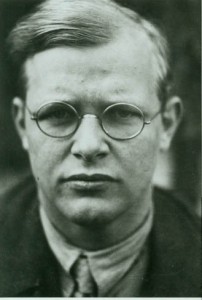
Dietrich Bonhoeffer

“time is the most valuable thing that we have, because it is the most irrevocable.”
― Dietrich Bonhoeffer, Letters and Papers from Prison.

I’ve been seriously writing for about five years. I’ve finished two novellas, one novel, and have begun work on another novel. Soon, I will begin the task of putting together book proposals! I am excited for the next step in my writing life (submissions) but there is a lot of work to do in the meantime, namely building my platform here.

This is where the friction begins. While it is fun and it is still writing, blogging is not the same as working on a novel. It is tough when you are trying to build your platform on the fly as well as finish a book and have other obligations as well. There is constant give. Poor blogs mean better novel writing. But poor blogs also mean less of an audience. It is a constant give and take. A constant reevaluation of my time, how I can spend it and still be the most productive possible.

How do you do this writer? How do you balance the rigors of life with the challenges of building a platform and writing your novels?

Cheers,

Bob

Are The Characters In Your Novel Bored?

When I write, I like to put myself in the shoes of my characters. I like to imagine the way they would react to circumstances that arise. I do this for two reasons. First, because I want to display the surroundings and situations as vividly as possible, and second, because I want to be sure that the story is interesting to them so they are intrigued and want to venture further down the rabbit hole I’ve created.

I am reading a book, which shall remain nameless, where I believe the characters are bored. They are trying to solve a mystery, and each one of their fates are tied to it. They are also competing, though he is unaware of it, with the director of an orphanage. It sounds interesting, but once they are on the path of solving the mystery, the characters meet every day at an appointed time to try to solve it. This goes on for about three hundred pages, until a new idea comes to them. Yikes.

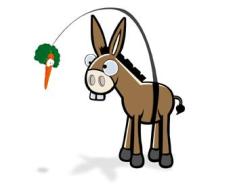
Get that carrot!

If you know me, I can be picky. I get easily bored with a novel. I want mystery, I want pace, and I want subplots.I don’t like to read a “filler” chapter. (This is a chapter on back story, a new character’s perspective that does not pertain to the plot, or a chapter that is written for the sake of being written and is otherwise disconnected with the story).

Each chapter should have some sort of dangling carrot in it. Something that makes your characters step across to the next page wondering where their life might take them.

Have you discovered a lack of subplots? Are your characters bored in your novel? If they are, chances are your audience will be.

Cheers,

Bob

Also, if you are a blogger, please visit the previous post about my need for guest posts. Thanks.

Guest Posts Wanted!

As some of you may know my family and I are moving to a new house! This means that my life will be up in the air and there may be some gaps in internet coverage. I am looking for posts to fill in the periods where I will not be able to follow through to my weekly audience.

This is where you come in, guest blogger.

I am not looking for works of fiction or poetry, but more or less tips on writing, tips for getting published, or anything relating to the life of a wanna-be published author. These will be used on May 24th, 25th, and 28th.

Please post your ideas/links in the form below.

Cheers,

Bob

← Back

Thank you for your response. ✨

Your Favorite Place To Write

My family and I are moving in the next week and a half. The excitement of moving into the new house is mounting as well as the thrill of having an official place for my writer self to call his own. Previously, we have lived in apartments and have not had the space for a desk. We’ve kept the bookshelves, but I have lost that creative space that I believe is tremendously important to any writer.

Recently, I have been scouring various websites for an inexpensive corner desk, albeit a small Scandinavian one. Which brings me to the reason for writing this blog: The importance of a writer’s space.

Some writers need certain music. Some writers need to visit the same coffee shop at the same day each week which I usually do with my friend Josh. Some writers need to dress the part and some simply need their desk. I am one of these.

What do you need to write? Is is coffee? Is it music Or is it a quick kickboxing round while listening to the Eye of the Tiger before getting down some words? This may be a silly question. However, if you are having trouble writing, my guess is that something has disrupted your routine.

Cheers,

Bob

When Characters Do What You Do Not Expect

There have been times when a friend has read my manuscript and told me something about my novel that even I did not know was there. It might have been, by pure accident, something clever or something deep and meaningful that I did not even realize I put into the text. This is one of the several reasons why I appreciate the art of writing.

Other things can surprise the writer of a story as well. Unforeseen plot twists, misadventures that add depth to the plot, and characters that at one point meant nothing can become crucial to the story are just a few examples of surprises that await the writer of any story.

During my first draft of the Tale of Calleleth, I wrote a one liner about a character that went something like this:

“Aeneia, a girl who sat three desks over from Custos smiled smugly at the rest of the class, most especially at the students who translated incorrectly. She was a beautiful girl two years younger than Custos but incredibly unbearable.”

Aeneia has a small speaking part thereafter, then disappeared into the netherworld of my story, to be forgotten by all, well at least everyone but me.

Elbow your way into a story

However, this was not the last of Aeneia of Calelleth. She morphed during my second draft and flourished in my third to become someone of dire importance. To be honest I was shocked, not because she was now a pivotal piece of my story, but because it was so natural to include her in the story. It was as if she was always supposed to be there.

How does this happen? How does one character who is inconsequential in the first draft become detrimental not only to book, but future ones?

Even as the writer I do not know. Has this ever happened to you?  Has a character, or some other element in your story, elbowed their way to the surface and demanded to be written?

Cheers,

Bob

Living The Writing Life

Earlier this year I read Annie Dillards book The Writing Life. I have to say I both liked it and didn’t like it as it described the grand thrill and depressive solitude of those who cannot help but write. I am not sure how often I will revisit it because it was confusing at times as the writing life often is but, it talked a lot about being alone.

The Writing life is an honest book. It is also a depressing book. It is true that no one can produce a work for a writer and it can indeed be a lonely road. However, as I dig into this life more and more I begin to understand that writing cannot simply be done while sitting in a cabin in the woods on some lonely Isle. The writer retells life and in order to say something about living to those who live the writer must live. Though, I understand it is difficult for the writer to come out of their shell even when surrounded by people.

The Artist’s Way

A few years ago one of my friends introduced me to The Artist’s Way by Julia Cameron. I would define it as an artists guide to help unfold the creative process. The workbook contains various exercises that refill your creative well. For those who have not read it and practices the exercises It may sound silly, like some secondhand self help book but, they work, and they work really really well. I would recommend it to any one who has a desire to paint, sculpt, write, or do something otherwise creative.

However, this book also is about being alone. What I find troubling is that we want to remain relevant as writers. We want to speak out and say something to the wide world, but we do it from the desks, studies, and coffee shops with ear buds in.

So, how do we do this writers? How does the writer maintain a balance of life and solitude so they don’t slip to the brink of loneliness or neglect their craft?

Cheers,

Bob

I’d like to take my Friday post to promote an interesting short story challenge on my friend Josh’s blog. Even if you have not written anything, give it a try. It should not take a lot of time.
Also, I will try to put my entry in next week and will be sure to post it. Hurry, the contest ends on May 31st!
Cheers,
Bob

joshmosey's avatarJosh Mosey

Here’s the challenge: Write a 26 word story, using the words in alphabetical order. Here’s my example:

Can you write a story using 26 words in alphabetical order?Arthur Bellows came down effortlessly, falling.
Ground.
Hit innocently?
Jumped?
Killed?
Laughter maniacal.
Now others peered quizzically ’round Sir Thomas.
“Unfortunate,” eXplained Vicar Wilson. “Yahweh’s Zephyr.”

If you have a blog, leave a link in the comments. If you don’t, just leave the story as a comment so we can enjoy your work.

I’ll be awarding three copies of T. S. Eliot’s The Waste Land and Other Poems at random to participants who get their submissions in before May 31st.

View original post

How to NOT Write a Novel

There are How To’s for just about anything!

Who doesn’t like a nice, “How To” post, book, or blog?

Me. That’s who.

No matter if it’s How to Make a Cake or How to Make a Fool Proof Thingamajig, I always tend to miss a step or two. I am not a detailed person by any means, though I do try with everything that is in me to follow directions before failing. I am being a bit dramatic, for some things work out wonderfully. However, when I hear about the next surefire way to write a novel, I hang my head at the many that will attempt said method and fail.

There are thousands of ways to write a novel. There are thousands of helpful writing tools. Many writers promote a certain type of writing or editing style and swear that it worked for them so it must work for you. So you, writer, like I, mimic these methods and reap none of the results. Sort of like trying to cram a square peg in a round hole, if you will.

The only sure way to write a novel is to write it, that is all. How do I know this? Because that is what the Greats say.

There are three rules for writing a novel. Unfortunately, no one knows what they are. – W. Somerset Maugham

There is nothing to writing. All you do is sit down at a typewriter and bleed. – Ernest Hemingway

These are only two quotes, however I have shared them with a few writers recently who found them helpful.

So if you are in the middle of using some other writers’ notes or methods and are getting nowhere, just stop. Stop spinning your wheels, consider it your first draft, and begin anew, taking from it the most valuable experience of all: the writing part.

Cheers,

Bob

Story Themes: The 1% vs. the 99%

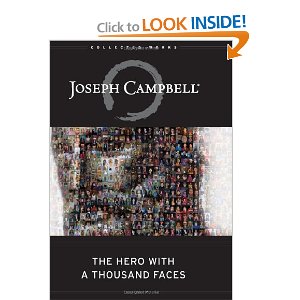
The late Joseph Campbell argued for a single thread of story that is retold again and again that stretches across all societies. This is depicted in what he calls “The Hero’s Journey” and articulated in several of his books, the most notable being A Hero With a Thousand Faces and is a tremendously popular theme in fiction, mythology, and even literary novels.

There are other story themes that stretch across multiple societies. If employed properly it allows the author to reach a vast audience. I will leave the discussion of The Hero’s Journey for another post but I would like to take this opportunity to discuss the idea of the 1% vs. the 99% whether socially, economically, or otherwise, in story.

We could start anywhere but I’d like to begin in the realm of cinema. One example that cannot be missed includes an Empire and an unlikely moisture farmer (is my nerd coming through clear enough for you?) from the remote planet of Tatooine. Does the Imperial March begin clashing in your mind? Well it should. Yup, Star Wars is a crux example, if you will, of the 1% vs. the 99%. Though the Empire is nearly invincible, their naked aggression and iron grip ignites a seemingly inconsequential response which leads to its downfall.

One recent manifestation of the 1% vs the 99% is represented in the Hunger Games. There are twelve districts set up to be subservient to one district and because of a failed coo, must give tribute. It is a sadistic twist on inequality centering on the lives of children to ratchet up the intensity. By no means did Suzanne Collins set out to represent the Occupy Movement, but the theme of inequality and the barbaric consequences that arise are evident.

This story theme does not reside in science fiction alone. An example in our daily lives is the Occupy Movement. The movement surrounds the idea of social and economic structures claiming that large businesses and financial institutions are set up to benefit the few (1%) rather than the masses(99%).

The 1% vs. the 99% is a ubiquitous but mailable and believable driver that can fit into any story. So if your story is flat and needs a bit of pep, consider adding to the backdrop. You very well may need something that strings it all together. Adding a story theme such as the 1% vs. the 99% might just give your story enough legs to stand up even under your own scrutiny.

Cheers,

Bob