Inspiration 1000 Years in the Making

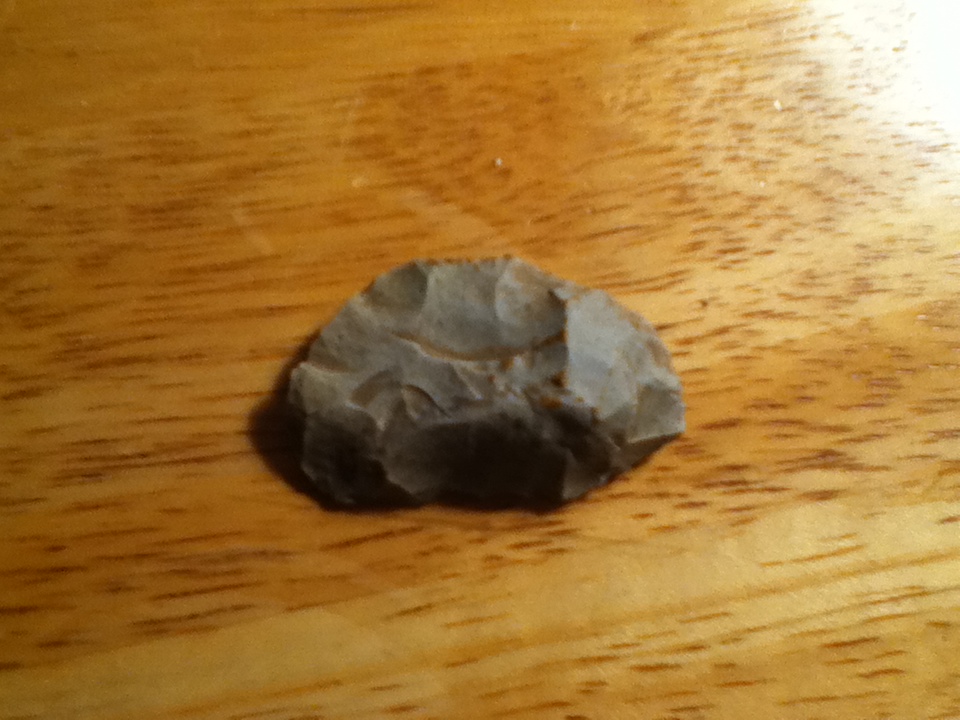
Stone Knife
Stone Knife

Stephen King takes walks.
CS Lewis took walks.

Walking holds a special place for writers. Perhaps it’s searching for something other than normal or maybe it’s the fresh air that comes with it. But the fact remains that walking or the experiences that happen during a walk, has enchanted for centuries.

A few months ago I went for a walk and found inspiration.

It was cold at first, the wind attacking from the southeast bringing a biting chill that my clothes hardly withstood. I was in a field walking with my dad and brother in between furrows of newly tilled earth. We trained our eyes on the ground and said little. You see, I come from a family of hunters. But that day we were not looking for game. We were searching for history.

“Here are some examples”, my brother said holding up a case of ancient Native American artifacts. There were sacred rocks and arrowheads, stone knifes, and a gamut of other tools. I stared at them excited to get my hands dirty and see what we might find. I knew that we might not find anything at all, but I love the idea of pulling something from the earth that has been there for centuries.

We plodded along for a half hour while bending over to inspect any stone that resembled an arrowhead or tool.

I bent down and pulled a rock from the soil and noticed something. It appeared to have a serrated edge. I brought it to my brother. “That’s a knife probably used for taking the scales off of fish,” he confirmed.

My mind went wild. I swam in and played hockey on the pond nearby.
It was incredible to think Native Americans once fished there.

By the end of the search I held and arrowhead and a knife and a newfound love for wandering in fields. Oh, and a whole bunch of new short stories.

I hope that whatever you do today, be it the same old thing or something new, that you find inspiration to get back to the page.
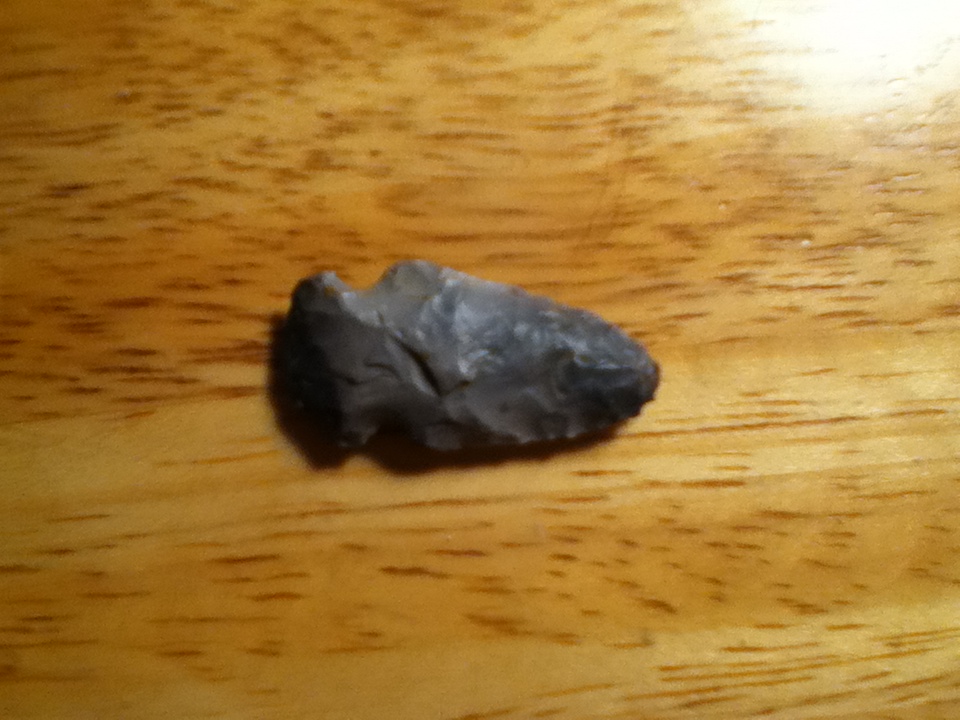
Stone Arrowhead
My Findings

Cheers,

Bob

The Muse in Everyday Life

Every writer has come to the point where things become muddy, sticky, and possibly monotonous. Is it writer’s block? Sure. Is it becoming bored with your own story? Maybe. Is it the dullness of life or a perpetual northern winter or a life event that arrives like a stray lightning bolt and saps you of any motivation to get to the page? Of course.

Do things that bring joy. Use that joy as fuel to write.

As a writer I admit I have been there. All of us have. But what can you do to get out of that funk? How can you rise above yourself and this particular situation with your friend or family member that just won’t leave you?

I believe the answer lies in what can be called a Muse. It’s the age old question. What can the artist (in this case writer) do to keep, well, doing? It’s not a sudden burst of energy that finishes a great work but coming back to the project day after day after day. The great writers of the past may have written amazing things because of the epic lives they lived. But more likely they became great writers because they pulled up their sleeves and wrote.

But this work requires energy. And yours is sapped remember?

In the article, How to Keep and Feed a Muse by Ray Bradbury, he explores a thread which holds the “fuel your writing idea” together and it is this twofold:

“I believe one thing holds it all together. Everything I’ve ever done was done with excitement, because I wanted to do it, because I loved doing it.” (Bradbury, Zen and the Art of Writing, pg 40).  This means, obviously, doing things you love. I have children and a full time job yes. But I haven’t stopped watching hockey or finding time for that good book or going on a walk or stopping by a library during lunch break.

What do you love?

Number two:

“Do not, for money, turn away from all of the stuff you have collected in a lifetime. Do not, for the vanity of intellectual publications, turn away from what you are – the material within you which makes you individual, and therefore indispensable to others.” Bradbury, Zen and the Art of Writing, pg 42).

So, writer. It’s time to unlock the broom cupboard you’ve put yourself into. The key, after all, is right in your hand. Take it and unlock the door. Don’t cast away responsibility but be sure to remember who you are and do something you love.

Allow that love to unlock excitement, ardor, joy.

And use the fuel it creates to write.

Cheers,

Bob


Finding Characters

Characters in novels are not usually boring. However, if you are writing your first novel you might find yours to be dull. I’ve been writing for a while now and realize believable and lively characters are key for a good book, no matter what the story is about.

The idea from this post came from a conversation my wife and I had with a neighbor. She and her daughter invited us to their house for a party. We’re new to the neighborhood and some people have been here for forty plus years. Our neighbor who is throwing the party said she invites every one every year. She told us that she invites a neighbor four doors down from her and each year he says “you cut down my trees”, then shuts the door.

You see, she lives in a row of houses built sixteen years ago and they mowed down his view of the forest to do it. That got me thinking, he could be a great neighbor in a story.

Here are ten places you might find characters. Although don’t be too odd and stare at the poor person forever. It might be a comment or a brief interaction, but characters are everywhere. Obviously, tread lightly when doing this and never use a character to insult someone. We all have our subtleties of personality that could propel a story.

  1. Family
  2. Friends
  3. Work
  4. Supermarket
  5. Gas Station
  6. Restaurant
  7. Neighborhood
  8. Church
  9. Books
  10. Movies/Television

If you are struggling to find the right character, pay attention to them in your daily life and the media you consume. I am sure they will pop up somewhere.

Cheers,

Bob

C.S. Lewis, On Stories

I like essays. I like essays by any notable writer because it helps me get into their mind, read what makes them tick, and hear what formed their world and life and why this translated into book form.

C.S. Lewis is one of my favorites because he can write something like this:

My dear Lucy,
I wrote this story for you, but when I began it I had not realised that girls grow quicker than books. As a result you are already too old for fairy tales, and by the time it is printed and bound you will be older still. But some day you will be old enough to start reading fairy tales again. You can then take it down from some upper shelf, dust it, and tell me what you think of it – C.S. Lewis’ dedication of the Lion Witch and the Wardrobe.

If you have read any of the Chronicles of Narnia, you will know they are nothing like the Disney film travesties. They are wonderfully written. Read them.

I write this post today because of something I read in a collections of essays by Lewis titled On Stories and Other Essays on Literature edited by Walter Hooper. One of these essays is titled “Sometimes Fairy Stories May Say Best What’s To Be Said”.

It goes like this:

In the Author’s mind there bubbles up every now and then the material for a story. For me it invariably begins with mental pictures. This ferment leads to nothing unless it is accompanied with the longing for Form: verse or prose, short story, novel, play or what not. When These two things click you have the Author’s impulse to complete. It is now a thing inside him pawing  to get out. He longs to see that bubbling stuff pouring into form…This nags him all day long and gets in the way of his work and his sleep and his meals. It’s like being in love.

Crazy huh? Does your work get in the way of your meals? Does it keep you up at night? Well, I think it should and so does C.S. Lewis. If, perhaps, it does not, is it worth your time?

Something to ponder for sure.

Keep writing.

Cheers,

Bob