Is Your Book Missing Something?

Have you ever finished a short story or novel and after reviewing it thought hey, wait a minute, it’s missing that thing. You don’t know what that thing is. It’s just not there. And it can be as frustrating as a strange smell in your house that you cannot locate or understand what is causing it. Then you remember the banana your two year old walked away with the other day and you don’t remember it being in their hand when they came back in the room.

Anyway, the thing, let’s come back to it. After pouring over your recent masterpiece you realize it has no flavor or omph or the secret ingredient that old Italian lady knows for her marinara sauce. It just does not explode on your literary taste buds or get the vote of confidence from your peers you hoped to receive.

I’ll tell you what was missing from my book. Tension and conflict.

Shadow
Get back here!

I’m sure some of you reading this have felt the same way. And knowing what it is and weaving it back into your story can be as painful and annoying as Peter Pan trying to catch and sew his shadow back on.

If you cannot tell what your book lacks, my guess is that it is probably some mechanical piece of storytelling. My advice to help you find this elusive thing is to ask someone you trust to read it. If you don’t have a writers group, I’m sure you know someone who is an avid reader intelligent enough to understand what needs to be sprinkled in. Be brave. Someone has to read it someday if you are going to be an author.

If you find yourself in this position don’t despair. Don’t give up. Keep reviewing and keep digging. Don’t look for the easy way to publish. You won’t be satisfied with that ending. Put it aside if you have to and come back to it later. After all, a simple steak can be great. But a steak marinated for two days, rolled in a spice blend, and then grilled to perfection will always be better.

Cheers,

Bob

Developing Characters – The Blind Date Approach

Characters make or break a work of fiction. No matter what perspective you are writing they have to be real, convincing, and unique to survive your entire book.

I’ve read a lot about creating characters. Not so that I can whip up bland cookie-cutter personalities but to learn how to develop them. Our readers want our characters to grow through whatever journey we take them. This does not mean the journey finishes with an end of the rainbow ending, but it does mean that they cannot be the same person at the beginning and at the end.

This is why I believe we should reveal our characters as if they are on a blind date with our audience.

I have not been on a date in about a decade. I’m happily married. But a blind date is a simple enough concept. You don’t start by telling them you are interested in getting married right now, or tomorrow at the latest. And you don’t ask them to see your parents tomorrow or move in. Relationships take time to develop.

Introduce your main characters with a few descriptive details. Not – he was old, fat and lazy. Instead – his hobby was TV, his favorite food was anything found in a gas station, and he kept a fridge next to his sofa so all of his snacks were within arm’s reach.

Okay that description may have been a bit lame but you get the point. Don’t tell the entire history of this person in three or four pages and interrupt the flow of the story. If you do it you, the author, are drawing attention to yourself with this magnificent sidebar. The introduction should feel natural and then take opportunities through the story to reveal the character through action and conversation.

I encourage you to go back and check each time you introduce a character. See how many pages and paragraphs you use to do this. Keeping it short and sweet can help keep your audience in what John Gardner called “the vivid dream”. They will be carried along by the current of your plot as they get to know the people you’ve created.

Keep Writing.

Cheers,

Bob

Plan, then Do. Fulfill those Dreams.

So, here we are. It’s Monday, there’s a brand-new week of us. We have the opportunity to fulfill our dreams or to crush them. There’s so much time ahead. We haven’t done anything with it yet. I know some of this time will be filled with work, family obligations, and even more with work around the house. A lot of things will be competing for this time.

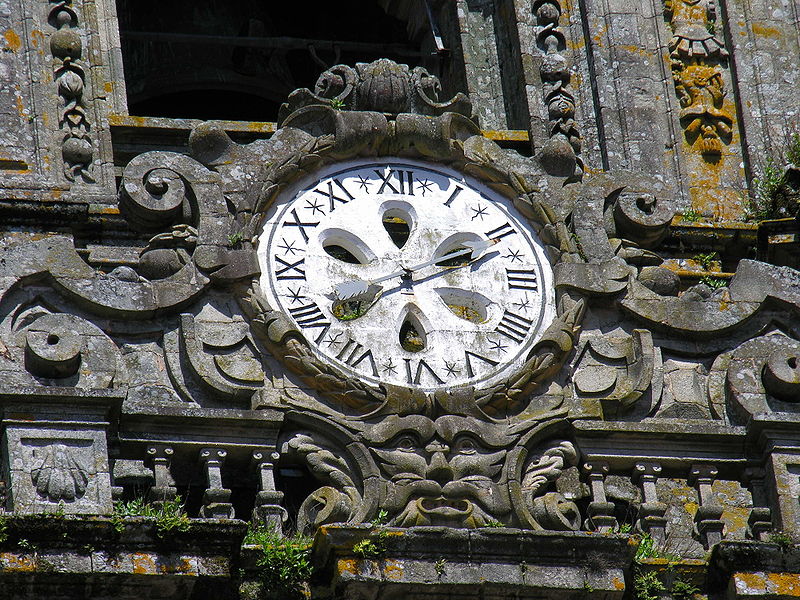
Right now it’s unused. And now is the time for a plan. You know what you want to do. I know what I want to do. I want to write. And not just anything. Not just blog posts, or Tweets, or Facebook status updates or comments. I want to write a novel. That is what I want to do.Clock - Spain

Today, aspiring writer, this post is for you. Look ahead. Find the time. This may mean sacrificing sleep or a lunch time. This may be sacrificing hanging out time with friends that are going out to places you love. But remember. Remember what you want to do. That is key. Then plan out your time to make it happen. Do not deviate.

Write well this week. Don’t give up. Look for ways to eliminate distractions or new ways to write as fast as you can!

Cheers,

Bob

Need Inspiration? Get Uncomfortable.

We all have our routines. I get up at 6am, you sleep in until noon. You like tea in the morning, I like coffee. You drive to work while listening to sports talk radio and I listen to some form of audio book, every day. Our routines are great. But they can also be deadly to our inner artist. Let me explain.

If you read my last post, you know that things have changed in my life. And by that I mean sleep is a luxury and my novelizing has to be crammed into awkward nooks and crannies of my day. My ideal writing time is from 5:00am until 7:00am. But as my son turns in for the evening around 2:00am things have had to change and it has been a breath of fresh air.

A Little Manet Inspiration

My wife has been going to bed around 9:00pm. I have been staying up until around 2:00am and when she gets up I go to bed. I thought I would be exhausted each night and not have the energy to do anything. I was so wrong.

As it turns out, I really enjoy writing at night, more than I ever thought I would. It is writing time and that is always relished, but also a moment of quiet and peace and reflection. I can even read. All is quiet and I have ideas and writing projects that have been given new life because of this shuffle of time.

Writing is a disciple. Once developed you can build momentum and you may end up with an article, blog post, or novel that needs some serious editing. However, changing the time you write, what you write or what you read can help shake loose the cobwebs of complacency and allow great things to happen. It can allow your artist to wake up, paint something fresh and new, or even awaken your spirit to be bold.

Do you find your writing project growing cold and stale? Write from 9pm to 3am in the morning. Get up early and go on a walk before beginning your writing time. Do something to freshen up your life a bit, it may help relax your writing muscles and prepare you for the serious work ahead.

Cheers,

Bob

A New Joy and A New Challenge

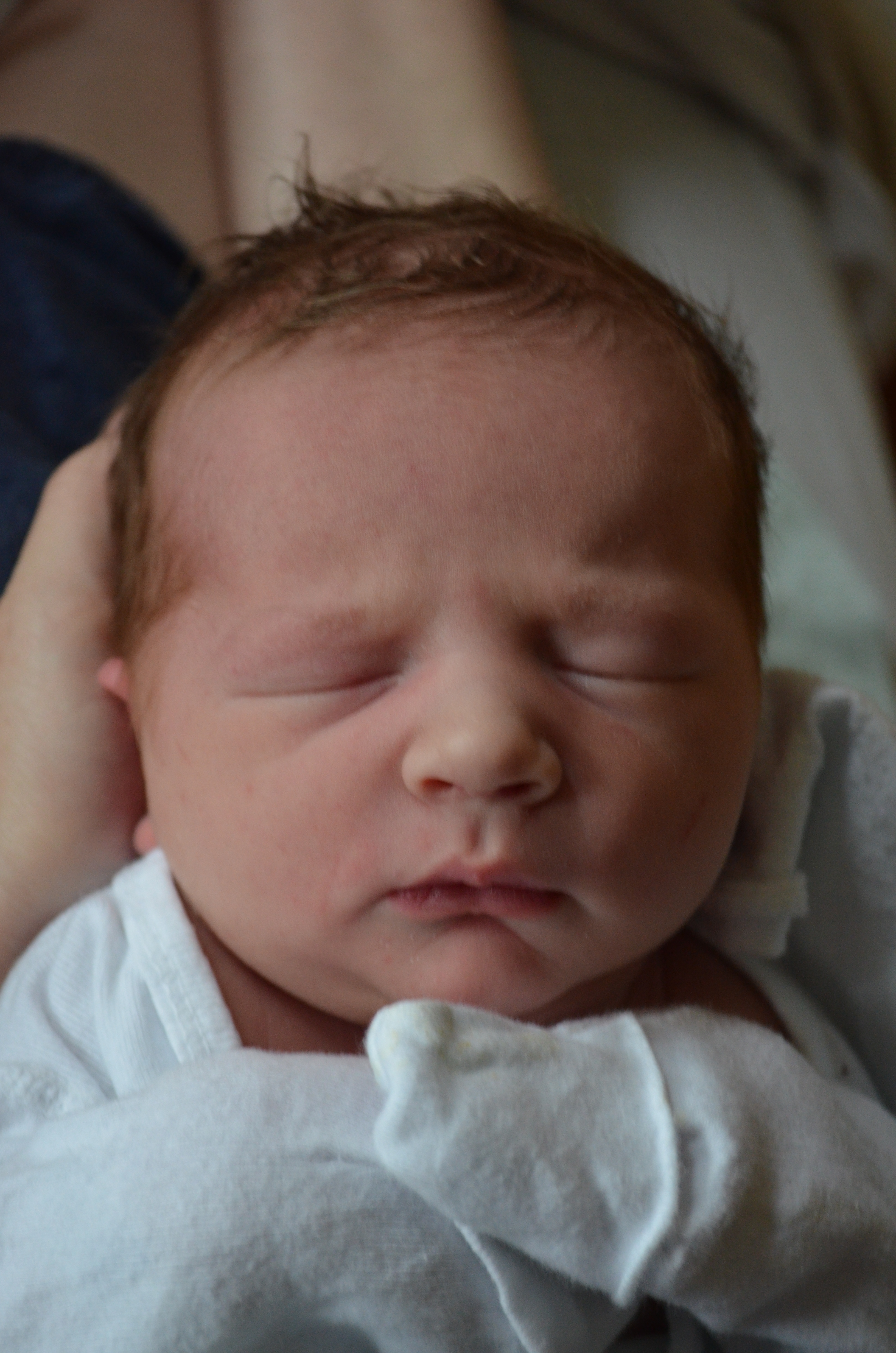
On July 30th 2013, my son was born. I cannot believe how amazing my wife was through the process (Once again! Seriously, you amaze me). Now my son is home, healthy, and destroying sleeping patterns but that is to be expected. Newborns do that to their parents.

As you might expect, having a child changes a lot of things. It also causes parents to reflect on the direction of their life, finances, and the future of their family. I began to think things like; where do I want to live in five years? Am I satisfied with my career? Am I satisfied with how I parent, treat my wife, and write? I hope I can never say I have done enough and continue to dig deeper.

Cute, isn't he?
Cute, isn’t he?

As this is a blog about writing, I wish to speak to that today. When my first daughter was born nearly four years ago I was blindsided by the joy of parenting. I barely wrote for recreation, but I did keep a journal for her every day for the first year of her life. I did not get back to writing for about ten months. For my second daughter I wrote in a journal as well, and got back to it after about six months. Now, for the third child, I want to make a change. I want to keep at it. No interruptions.

The reason for this declaration is not because my son is less important. It is not because I wish to put my own dreams in front of my children and my wife. The reason is that change will always come in life. Roadblocks, new joys, and redirections will come in various forms. That is something I cannot change. What I can strive for is to continue to write despite what life may bring.

How about you?

What excuse do you have in your pocket to pull out and show your novel or writing friends?

What is stopping you today? Got that in your mind? Good. Now, how can you get around it? How can you create space and time to do what you love? Let me know in the comments section below.

Write 500 words today.

Cheers,

Bob

When The Writer Battles Self-Doubt

Bravery.

If there is anything a writer (or any artist) needs, it is that. After all, you are placing a short story, essay, painting, poem or some other original work out in the open for someone to love or scrutinize.

Though I have written for years and published a little, I still wrestle with small bouts of insecurity. The shadow comes when I blog, tell people I am a writer or submit the latest short story. I think I am not good enough, original enough, have not lived and experienced enough to put something amazing or meaningful together.

Over the last few months I created a writing space. I built bookshelves, put pictures up of my wife and kids, in order to have a place to write and keep my writer-ish things (like a sailboat, family heirlooms, hockey pucks and, most importantly, my leather bound journals).

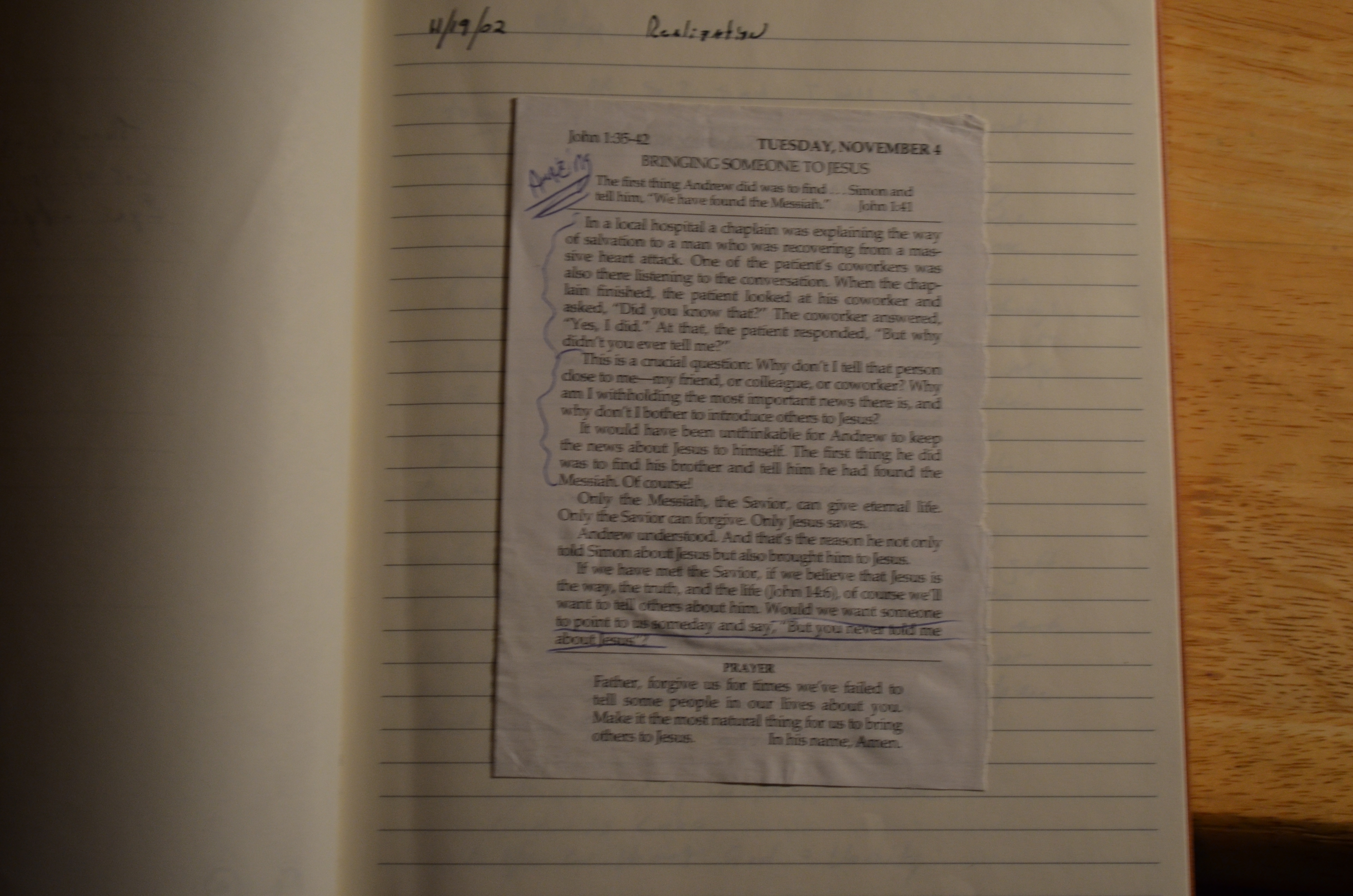
Every once in a while I crack open a journal entry or two to review an important date of my life. The entry at 5am before I was married to my beautiful bride. The birth of my first daughter. The day I graduated college. The day my second daughter was born. I reflect and remember how much I have grown both as a writer and a person. Recently, I read my very first journal entry and smiled.

This “entry” consisted of a date, title, and a scrap from a devotional book. That’s right. My first attempt at a journal entry was also my first attempt at plagiarism.

Be what it is, I learned something. Something significant and comforting that I consider each time I embark on a new project.

I have come a long way.DSC_0073

I can see progress and joy in my entries and short stories. I see the love of something good and, even in the rarest of occasions, profound.

There are many things we build on. But they all come from the first word, the first step of trying something new. Maybe it works. Maybe it doesn’t.

That is not the point. The point is the step.

After a while you can see just how far you’ve come.

If there is any doubt in you writer – think about the piece before. Think about how far you’ve come. I did and find I am a lot further down the road than I could ever have expected.

And it gives me confidence to keep going.

Keep (or start) Writing.

Cheers,

Bob

The Muse in Everyday Life

Every writer has come to the point where things become muddy, sticky, and possibly monotonous. Is it writer’s block? Sure. Is it becoming bored with your own story? Maybe. Is it the dullness of life or a perpetual northern winter or a life event that arrives like a stray lightning bolt and saps you of any motivation to get to the page? Of course.

Do things that bring joy. Use that joy as fuel to write.

As a writer I admit I have been there. All of us have. But what can you do to get out of that funk? How can you rise above yourself and this particular situation with your friend or family member that just won’t leave you?

I believe the answer lies in what can be called a Muse. It’s the age old question. What can the artist (in this case writer) do to keep, well, doing? It’s not a sudden burst of energy that finishes a great work but coming back to the project day after day after day. The great writers of the past may have written amazing things because of the epic lives they lived. But more likely they became great writers because they pulled up their sleeves and wrote.

But this work requires energy. And yours is sapped remember?

In the article, How to Keep and Feed a Muse by Ray Bradbury, he explores a thread which holds the “fuel your writing idea” together and it is this twofold:

“I believe one thing holds it all together. Everything I’ve ever done was done with excitement, because I wanted to do it, because I loved doing it.” (Bradbury, Zen and the Art of Writing, pg 40).  This means, obviously, doing things you love. I have children and a full time job yes. But I haven’t stopped watching hockey or finding time for that good book or going on a walk or stopping by a library during lunch break.

What do you love?

Number two:

“Do not, for money, turn away from all of the stuff you have collected in a lifetime. Do not, for the vanity of intellectual publications, turn away from what you are – the material within you which makes you individual, and therefore indispensable to others.” Bradbury, Zen and the Art of Writing, pg 42).

So, writer. It’s time to unlock the broom cupboard you’ve put yourself into. The key, after all, is right in your hand. Take it and unlock the door. Don’t cast away responsibility but be sure to remember who you are and do something you love.

Allow that love to unlock excitement, ardor, joy.

And use the fuel it creates to write.

Cheers,

Bob


The Next Big Thing: What I’m Doing Next

Roger Colby at Writing is Hard Work invited me to be a part of a blog chain that introduces my latest work while promoting his blog and three other blogs of writers like myself.  I hope that you will check them out.  I’m highlighting:

Daniel Bowman at danielfbowman.webs.com

Jessie Clemence at Jessieclemence.com

Elizabeth Hein at scribblinginthestorageroom.wordpress.com

  • What is your working title of your book (or story)?

The Tale of Calelleth

  • Where did the idea come from for the book?

This is a hard question. I’d like to say it came from everywhere. What I was reading at the time – How the Irish Saved Civilization, what I was interested in writing – grand sweeping epics, coming of age stories and, yes, romance, and something that happened in my life – a vicious storm that swept through my home town. The sort of storm that makes noon like night. It causes the constant hum of reality skip a beat and become suddenly vicious and beyond your control. All three of these things collided one summer.

  • What genre does your book fall under?

Fantasy – high adventure, coming of age, young adult.

  • Which actors would you choose to play your characters in a movie rendition?

I write with some characters in mind. I picture my villain Maero as Russell Crowe from Gladiator. Strong, noble, and a family man, but he is bent and tortured by his loss. Beyond that, the characters are drawn from people I have met, with the possibility of the main character’s best friend Comitis – recently, I’ve tried to paint him in the light of James Roday (Shawn Spencer) from Psyche.

  • What is the one-sentence synopsis of your book?

Calelleth’s leaders have sworn to forget the horrors of their past and succeed in rewriting history for their people, that is, until an army arrives unannounced demanding the past atrocities be remembered and atoned for.

  • Will your book be self-published or represented by an agency?

I’ve met with an agent and will be submitting my novel to an acquisitions editor soon (hopefully next week). I’d like to have it represented. I know this is a difficult task but I believe in my work and will be relentless about publication until it happens.

  • How long did it take you to write the first draft of your manuscript?

About a year. However there have been numerous drafts. Some chapters have been rewritten 8-9 times, others 4-5 times. I’ve been working in the debut novel, outlines for subsequent books and the history behind my world for over 8 years.

  • What other books would you compare this story to within your genre?

If you’ve read The Emerald Atlas you’ll find children thrust into roles that they find unfitting. One day at an orphanage, the next caught up in the grand struggle of trying to save a world. Also, the academics and young love of Harry Potter, the Merlinesque grandfather in innumerable tales, and the robbing of the rich to equip the poor that is accustom to Robin Hood.

  • Who or what inspired you to write this book?

Sadly, I never read the Lord of the Rings while growing up. While that might shock some people I think this was to my benefit as it is not old hat now. I did not begin to write or read a lot until I was in college. I read while younger but stopped for sports. I rediscovered the spark by watching the first Lord of the Rings film. The age and reality of the other world was enchanting. I couldn’t stop until my one tale was written and I have been reading and reading since. I love the Inklings (C.S Lewis, J.R.R. Tolkien and others) and my writer’s group is called the Weaklings in tribute to them.

  • What else about your book might pique the reader’s interest?

This is the first installment of seven books. You follow not only the life and death of many characters but also the redemption of a people that suddenly come to realize the depth at which they have scared the earth and the peoples they have forgotten beyond their borders. In The Tale of Calelleth I have tried my best to intertwine the familiar portions of Young Adult fiction – love, coming of age, and the reality that comes with responsibilities of adulthood with a medieval epic.
The Writer’s Lie – That PERFECT Writing Time

When I first started writing it was at a feverish pace. I didn’t have children at the time and my wife was fine with me scribbling away. I spent a lot of time at the kitchen table writing in our old apartment. This was how I finished my first manuscript. It was a great time for wild publishing dreams, before I realized how much work writing is.

Fast forward three years and my wife and I have two kids. I have a house and growing responsibilities. I realize that sleep is now important as I approach thirty, and that I need to manage my time better. Back in the pre-children days I could plan out my writing time. Now I want to spend time with my children and I told my wife, because they are more important, I will sequester my writing time to early in the morning or late at night. A writer never sleeps, or in my case stays up past 11pm.

I was inspired to write this post because I was lying in bed an hour ago thinking, I’m just too tired to write. And then again, if I am too tired I will probably just write something awful that needs to be deleted. I thought I needed rest. I have to drive until about 1am to visit family in New York so the thought was not without merit.

However, I soon found myself dwelling on the ideal writing time. You know that cabin in the woods, coffee fresh off the pot, the sun is just poking over the horizon across the lake and I am already on page fifteen. The story is flowing out of me onto the page and I am typing flawlessly. I think this is the big lie about writing: That there is this ideal time somewhere out there that will unlock our potential. This is what I was thinking about while lying in bed. Then I realized as I did awhile back that it does not exist.

There were times when I first had children where I thought I could not write on a certain day because I was tired. True. There were times I didn’t feel like it because I stare at two computer monitors at work all day. True. Then I thought I needed about two hours to get my gears going to have momentum to write something well.  However, when you look for the perfect time to write, you tend to look for weeks and weeks and stop writing altogether.  This happened to me when my first daughter was born.

The thing is, writing is a lot like exercising. It can be painful when you do it with consistency at first. But soon you will find that doing thirty sit ups are not as hard as it once was. Just as writing that first sentence is not as difficult as it once was. So, find some time to write. Stick to the schedule. Your novel will not write itself. And stop hoping for your schedule to change, your kids to sleep, your work to become more flexible, or all of the worries of your life to fade away. Pick out a time to exercise your writing muscles, and get that novel done. Start today.

Happy writing.

Cheers,

Bob

A One Night Writer’s Conference

I recently attended a part of the Breathe Writer’s Conference. I was left with a taste for more. Meeting writers, gathering some encouragement, and coming to the realization that there are more than three people in the Grand Rapids community that are in pursuit of publication were grand things indeed.

Thus, my three brave comrades and I decided to throw a writers conference of our own: A one night writing conference. We have the venue selected (the soon to be new and improved Baker Book Store) and the date (Friday, February 8th 2013). There are a lot of things to be worked out. However, I can tell you that it will be a wonderful time. The schedule provides time for three brief presentations, discussion, insight into the writing life, as well as time to mingle and write. Also, the conference is free so you don’t have an excuse.

The topics of discussion are still up in the air but will most likely include:

  • Using Social Media
  • Flash Fiction
  • Encouragement (or swift kick in the writing pants)
  • Marketing
  • Writing in the cracks of life
  • What happens after your novel gets to the publisher

I will update you as those topics become more solid. Josh, Andy and I hope that the connections, instructions, and encouragement you receive will propel you toward your publication dreams, whatever they may be. For now, mark it down on your calendar that you already have plans on February 8th. You’ll be at a writer’s conference. Keep writing my friends.

Cheers,

Bob