The 47 Endings of Hemingway

It is a myth that writing comes out perfectly the first time. I don’t think I have ever heard of a writer penning a novel, posting it, and mailing or emailing it off to be printed. I discard and rework almost every part of my writing. Most of the time if I do not like a chapter I rewrite it entirely. I have several drafts of all of the chapters in my book. If I were to go as far as forty seven drafts of a single chapter, I might just have to give up. However, that is exactly what Hemingway did, on ONE novel.

A Farewell to Arms is not my favorite novel. In fact, I am not a huge Hemingway fan at all. His writing is brilliant, but his stories are far to bleak for me. Not that I despise bleakness, my novel ends quite awfully, but its hard to take at times when real life is just as dark.

I wanted to link a post to the article about the forty seven endings to remind the writer how much we have to give to finish well. How much the writer must persevere. How much the writer must refine and how much writing is not just about getting the grammar right.

Find sometime to write today.

Cheers,

Bob

Writer’s Bootcamp: Get Into Writing Shape!

I don’t know much about John Dufresne. I haven’t read anything he has written. But, as I was at the local library on Monday, I went to the writing reference section and checked out some books on writing including his book The Lie That Tells a Truth. I found such wonderful exercises at the beginning I could not help but share. If you like these, you may want to check out his book which is turning out to be a very inspiring and helpful read.

He begins the first chapter which is titled Getting in Shape by asking you to stop reading. Doesn’t that sound a bit odd? Probably not the greatest way to sell books, leaving out the elementary writer’s rule of hooking the reader and all. Then he lists three writer’s exercises which I recommend doing now. They will help you both tone and discover those specific writing muscles we let turn into flab from time to time.

Remember before you begin, remove all distractions. Phone, family, work, email, internet. Remove yourself from everything and dive into the writer’s bootcamp.

1. Here and Now! This is the first exercise. Write about where you are physically. Your writing room, bed, kitchen, outside, where ever. Write in first person, present tense.  Write about what your senses pick up – see, hear, touch, taste, smell. Use each one to create a sensory “image” of where you are right now.

At the end he leaves a handy little quote worth remembering by W.H. Auden – “The first act of writing is noticing”.

2. Something Missing. Evaluate your life. What is it that you wish you had but do not. It could be a relationship, something you lost perhaps an heirloom, or deeper. For instance, something that keeps you awake at night and causes you to wake up in cold sweats. Write about whatever this is and allow it to take form.

3. Where you were born. Think about where you were born, where you grew up. What was it like? How does it defer from where you live now? If you are still there, write about what has changed since you were young.  Where did everyone work? What was the “talk of the town”. How did people talk, walk, or dress? What were the stories of the town, the old building round the corner, the decrepit ice cream shoppe (and why the sign read shoppe and not shoppe)? Write about your school, the places people did not mention, where the uppity people lived, and the haunting secrets buried in that dilapidated mansion over which grey clouds always seem to linger?

Now you’ve written unbridled for thirty minutes. Well done you’ve effectively lifted writer’s weights!

Check out his book. Buy it, or rent it from your library, give your writer’s self a present today. After all, you’ve earned it.

Cheers,

Bob

How Does A Writer Keep Writing?

The start of something new can be invigorating. Whether it is a new beginning at college, a marriage or a move, there are moments in life that leave us full of energy and full of joy, thinking we might literally fly or perhaps, merely climb Everest.

I have felt like that many times with my writing too.That I could sit down and work through the night. My novel would be done and I can move onto the next project I have swirling in my mind. I admire Conan Doyle’s Sherlock Holmes for his unquenchable energy and vigor or the characters in Jules Verne’s stories or the pace at which Dickens can lay down a story for the simple fact that their prose can move so ferociously fast and be so strikingly precise that you cannot help but be swept along by their current.

But what happens when your mind is not abuzz with ideas? When you are trying to drill down for water that just isn’t there to quench your parched aesthetic tongue? Can you simply pick yourself up by your bootstraps and march on? Not if your boots have been stolen.

So how do you continue writing during the dry times, whether in life or in the writing process? How are you encouraged to press and get to your writing implement to churn out more of your novel?


Cheers,

Bob

Effective Writing: By Schedule or By Whim?

Don’t lose these!

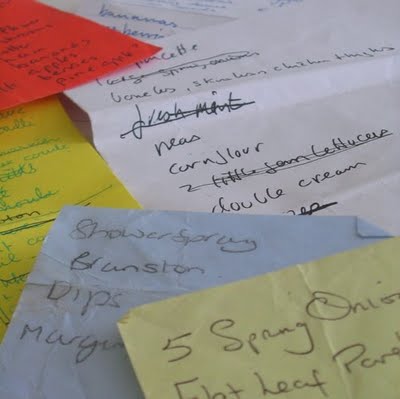
I am a list maker. I live and die by them at home and at work. Sometimes I get sidetracked and provided that the lists do not get lost, they are essential to me to obtain measurable progress and complete tasks.

This translates to writing as well. I jot down ideas for blogs, stories, tangents, and the like to finish later. If I did not, I am sure the stoke of genius (or so I think!) would rush out of my mind just as fast as it invaded. So for me to be a successful writer at this stage of life I have to plan and be intentional. I have to fight for time to write. If I do not it gets crowded out.

This made me think (and perhaps you can do this along with me) about what makes me successful in my writing? Would it be allowing a jolt of inspiration to come tingling into my mind while I least suspected it and then feverishly scratching it on paper, the laptop or any device that spits out sentences? Or rationing out time every day at the same time to plod along, however dull and uninspiring that might seem.

So how about you? Are you better at waiting for the stroke of genius to come, then churning out fifty pages? Or are you better suited to write two pages a day, every day, until your novel is completed?  My suspicion is that when you evaluate the structure of your daily life, or lack there of, you will have your answer.


Contacting A Literary Agent

As I was creating a spreadsheet of various agents to contact I came across a few things that surprised me. I would like to share them with you. If you have started the query process please post any helpful websites or information you discovered, thanks!

Not this sort of agent, though they might help…

I discovered most of the contact information for various agencies using AgentQuery.com a splendid site. Simply selected the type of novel you are writing and follow the directions. I do not count myself a detail oriented person but even I, who am as easily distracted as a house cat, can be sure to find an agent or two to submit a query or chapters. The marvelous thing about AgentQuery is that they tell you if a particular agent is open to submissions and if they accept email queries to speed up the submission process and target agents who want to hear from writers now.

The first thing I need to finish is my query, but some agencies want a variety of items. Some just want a query, others want a query and a bio, more want a query a bio and a few sample chapters, and even more wanted a query a bio and fifty pages of your novel sent. Once I get a list of about fifty or so, I will begin putting the queries and chapters each agency requires.

The submission guidelines are relatively easy to locate, just click the link in Agentquery to access a particular agent and click on their submission guidelines. I was surprised how easy it is to submit the required information. Most encourage new writers with open arms and even tell you ways to interact with them so they can get to know you as you submit your work.

Another nugget of assistance was discovered on an agency website The Knight Agency. They listed information on how to write a proposal, query, and how to make your work stand out. I was also happy to discover most agents provide helpful tips on many things like query letters, tell you how to get through spam filters and why disqualifies most authors, besides poor writing.

How about you? Are you are the submission process yet? What is your plan of action?

Cheers,

Bob

How To Write A Book Proposal

I promised, back at the beginning of the month, to send out a proposal to an agent. I feel unprepared, like a parent sending their child off to kindergarten for the first time. However, it must be done, eventually. I am a writer after all and this is, inevitably, the next step.

But, how do you construct a book proposal? How do you prepare your little beauty to step out of the nest with confidence?

As you might very well know, there are many ways to publish and I plan to try the Mount Everest of them–traditional publication.

The following is advice on, and an outline of, a basic book proposal. You might ask when is the appropriate time to write one of these and the answer is two fold. Non-fiction proposals can be both before and after the book is finished, but for Fiction there is no wiggle room. You must have a completed novel before sending in the proposal.

Please keep in mind that each agency, agent, and publisher, might have different criteria of what they need. Please see their submission guidelines before submitting. Also, do your research. Don’t spend your time sending your thrilling space odyssey novel to a nature magazine. Know who you are submitting to in order to find out what they usually publish. Otherwise, all of your time and mental strain over your proposal is for naught.

I. Overview

This is your elevator pitch. In two or three paragraphs write the synopsis of your book, What is this book about? This might be the only time you have the attention of an agent or editor so make them beg for more. Having trouble knowing how to write one? You can find examples of these on the back of nearly every book. Also, bounce ideas off your writer friends.

II. Target Audience

Who is the audience? Is it a children’s book? Is it a YA novel? Is it a picture book? Is there a market for it? If your work can reach a secondary audience name them as well. Basically, name all parties that might be interested in this book. Don’t be bashful, but be realistic. Your grandma will probably not be interested in your book on Weapons of the World.

III. About the Author

This is your time to shine. Who are you? What is your experience or credentials? Do you have a blog or twitter following? Do you have another platform? One thing to be encouraged by is if you are a first time author there are agencies that are looking especially for first time novelists. You don’t have to have 300 short stories published for someone to read your work. Though, it wouldn’t hurt.

IV. Competition

If there is an audience, what other books are currently reaching them? Please do not say you are writing a YA book that reaches the EXACT SAME audience as Harry Potter. While it may be true, it draws unfair comparisons. Know other books that might be in closer competition.

If you are writing a Romance novel, read the back of every romance novel in your local bookstore then write down the ones that sound similar to yours. After this, go home and research them until you are the expert in what is selling, and how you can do better.

V. Marketing and Promotion

Unfortunately, authors are expected to do more for their sales in recent years, especially if they want to be successful. This means speaking engagements. This means book signings and radio or television appearances and interviews in the local paper or your favorite magazine.

This might sound both intimidating and presumptuous. The best place to start might be an author you know who has experience in these sorts of things. If not, ask the local bookstore manager how authors do book signings and even go to a few of them yourself. Then check at the library to find out what you need to do to get some talking time there. Also, if there is a local radio station or university that owns a radio station or television spot, call and talk with them.

Don’t forget your blog, Twitter account, Facebook, and any other social media/writing outlet you might utilize. All can be used for the promotion of your book.

VI. Sample Chapters

I don’t think I need to say a whole lot about this but the particular agency where you are sending your novel may have certain criteria. It might be the first two, three, or five chapters or merely a few of the best chapters in your book. Read the guidelines carefully and do EXACTLY what they say.

In conclusion, the one thing I would like to stress the most if I have not already is, be sure you follow the rules! Don’t deviate. Don’t be “creative” or try to stand out. Don’t reformat your proposal using cute font. Be professional and serious, no rose perfumed parchment. I don’t know how many times I have read or listen to an interview with an agent that said the reason a lot of novels are disqualified is because they are either not good, or don’t follow the directions in the submission process.

It’s Friday, (WOOHOO!!!) and this means there is only one more week to go on my self-imposed book proposal deadline so I had better get cracking. If you are ready to do the same, good luck my friend.

Cheers,

Bob
How I Plan To Edit My Novel

After I finish my book proposal (more on that tomorrow) I plan to get back to making my novel better. Some might think this is backwards, but there are things I’d like to clean up as I wait patiently (all to eagerly perhaps) for that form rejection letter.

When taking gravity, mathematics, and the concreteness of reality out of the way, there are about a billion ways to do just about anything. Here is my bumpy  and unproven road towards a cleaner fourth draft.

Step 1: Create Small Goals

When I look back on my novel there is a lot of work to be done. But I plan to approach these corrections and tackle them like I remodeled me house, one room at a time. If I were to read through for grammar, characterization, plot, and other errors simultaneously, I would immediately become overwhelmed by the plethora of mistakes. So I plan to read my novel several times to sweep over each one. Also, I will to do a simple read through taking notes first, before I do any hacking and whacking to my manuscript.

Step 2: Create A Plan

Not only can the writer/editor become overwhelmed with the mistakes that have been made on an early draft of a novel, but it can be nerve racking knowing just where to begin. I plan to print of my manuscript three chapters at a time and each night before I go to bed, simply read through 5-10 pages. 400+ pages can be a lot of work, but if I were to get on a role and finish 10 pages a day for a week, there’s 70 pages right there. And that’s not to mention lunch breaks at work and the occasional morning where I might have the energy to get up and knock out 5-10 pages.

Step 3: Identify Areas of Improvement

As I do my casual read through, while scratching some notes, I plan to identify areas of improvement. For instance, if I have inaccurate descriptions, if I forget a character completely, if a whole scene needs to be rewritten, a new scene added, or, as William Faulkner say if he were standing over my shoulder, if that little darling part needs to be killed.

Again, as I said at the beginning this is not a sure-fire way to edit. I don’t think there is. I think there are formulas we can use that might help, but it is what fits the writer best. The most important thing for me is figure out a system that works, and to do it.

One word at a time.

Cheers,

Bob

Show Me the Story! – Writing Tips

Show don’t tell.

There are things in life that need to be chewed on for some time before the light bulb comes on and we enter the realm of understanding. Showing and not telling is one of the things that took a while for me to understand. Since the light bulb has come on, my writing has not been the same.

But what does this mean? Let me give you an example.

“Charlie was furious”.

This is a line you might come across in your own writing, or at least phrases like this. These phrases describe a scene, but fall unequivocally short of painting what is happening inside the character. This tells what has happened – Charlie was furious. This does not allow us to get to know the character to advance the story. Albeit, it might be a justifiable fury, but in the end if falls short to enrapture the reader in the tale you are in the process of spinning.

So, how do you show something without telling it? Glad you asked. Let’s revisit Charlie in the “furious” scene.

Charlie ran as fast as he could after Harry, but the older boy was much faster and was soon out of sight, cackling as he sprinted over the hill. Charlie punched his fist. He roared and raged kicking the dirt and screamed obscenities which echoed across the green glen.

Here, we are not sure what happened to evoke such anger, but the action is what pulls us in. The action of punching, screaming, kicking, and the echoing obscenities. Whatever it was, it made Charlie furious. But I didn’t say that now did I?

I hope you found this brief tip and example helpful.

I also hope you have time to enter your writer’s world this weekend.

Keep writing my friends.

How to NOT Write a Novel

There are How To’s for just about anything!

Who doesn’t like a nice, “How To” post, book, or blog?

Me. That’s who.

No matter if it’s How to Make a Cake or How to Make a Fool Proof Thingamajig, I always tend to miss a step or two. I am not a detailed person by any means, though I do try with everything that is in me to follow directions before failing. I am being a bit dramatic, for some things work out wonderfully. However, when I hear about the next surefire way to write a novel, I hang my head at the many that will attempt said method and fail.

There are thousands of ways to write a novel. There are thousands of helpful writing tools. Many writers promote a certain type of writing or editing style and swear that it worked for them so it must work for you. So you, writer, like I, mimic these methods and reap none of the results. Sort of like trying to cram a square peg in a round hole, if you will.

The only sure way to write a novel is to write it, that is all. How do I know this? Because that is what the Greats say.

There are three rules for writing a novel. Unfortunately, no one knows what they are. – W. Somerset Maugham

There is nothing to writing. All you do is sit down at a typewriter and bleed. – Ernest Hemingway

These are only two quotes, however I have shared them with a few writers recently who found them helpful.

So if you are in the middle of using some other writers’ notes or methods and are getting nowhere, just stop. Stop spinning your wheels, consider it your first draft, and begin anew, taking from it the most valuable experience of all: the writing part.

Cheers,

Bob

Writing to Music – Impossible or Essential?

At first I thought the idea preposterous. Trying to articulate a sentence using carefully chosen words, while guitars, drums, and a forlorn singer are echoing rhythmic poetry into your ears at unnecessary loud volumes. It’s like two people trying to go through a turnstile to board a subway from opposite sides. It simply does not work…or does it?

Coincidentally, I have, at least to my feeble understanding of what writing is, composed my best chapters when listening to Frightened Rabbit or one of my favorite classical movie soundtracks. I even finished a draft of a novel while doing it. I am not sure if it is the simple fact that I listened to the same music again and again while writing a particular chapter or novel, but after a while, I simply could not write without music.

There are many places to get music: iTunes, Pandora, but I choose Grooveshark. My friend Josh introduced me to it and its my favorite website for music I’ve discovered thus far. If you have other places (legal domains only please) do share.

I often write to Frightened Rabbit‘s live album Liver!Lung!FR! Why? I’m not sure exactly. While their music may be sometimes over the line, they remind me of Mumford & Sons only a bit more, well, English.

The soundtrack to Transformers 2: Revenge of the Fallen has been a favorite. The single movie of the trilogy that I did watch, I did not like. But the soundtrack to Transformer 2: Revenge of the Fallen help me finish my latest draft on The Tale of Calelleth. Why? The noble trumpets made me think of a cavalry charge and self-sacrifice, two events incorporated at the end of my book.

The soundtrack to War Horse is my new favorite. I have started my next novel which takes places at Keuka Lake in upstate New York. Its a tremendously verdant area, filled with green mountains, groves and groves of trees, and deep mysterious lakes. It is also about friendship between two kids who meet there one summer and an event that changes them forever. I hear this in the music. I can imagine the films’ landscape while listening to the soundtrack and it combines a feast of imagery that fuels my writing.

Regardless of what I listen too it must either fit the story or scene. It can also be the a random album just like Frightened Rabbit. However, I could never write about something sad while listening to a song blazing at a furious pace. For that I must have something melancholy, striking a chord, releasing a flood of mental images that pours from my finger tips and onto the page.

How about you? What music do you listen to when you write, if any? Do you find it too distracting?

Cheers,

Bob