“time is the most valuable thing that we have, because it is the most irrevocable.” ― Dietrich Bonhoeffer, Letters and Papers from Prison.
I’ve been seriously writing for about five years. I’ve finished two novellas, one novel, and have begun work on another novel. Soon, I will begin the task of putting together book proposals! I am excited for the next step in my writing life (submissions) but there is a lot of work to do in the meantime, namely building my platform here.
This is where the friction begins. While it is fun and it is still writing, blogging is not the same as working on a novel. It is tough when you are trying to build your platform on the fly as well as finish a book and have other obligations as well. There is constant give. Poor blogs mean better novel writing. But poor blogs also mean less of an audience. It is a constant give and take. A constant reevaluation of my time, how I can spend it and still be the most productive possible.
How do you do this writer? How do you balance the rigors of life with the challenges of building a platform and writing your novels?
When I write,I like to put myself in the shoes of my characters. I like to imagine the way they would react to circumstances that arise. I do this for two reasons. First, because I want to display the surroundings and situations as vividly as possible, and second, because I want to be sure that the story is interesting to them so they are intrigued and want to venture further down the rabbit hole I’ve created.
I am reading a book, which shall remain nameless, where I believe the characters are bored. They are trying to solve a mystery, and each one of their fates are tied to it. They are also competing, though he is unaware of it, with the director of an orphanage. It sounds interesting, but once they are on the path of solving the mystery, the characters meet every day at an appointed time to try to solve it. This goes on for about three hundred pages, until a new idea comes to them. Yikes.
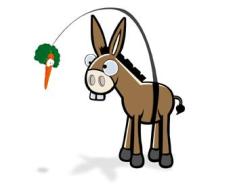
Get that carrot!
If you know me, I can be picky. I get easily bored with a novel. I want mystery, I want pace, and I want subplots.I don’t like to read a “filler” chapter. (This is a chapter on back story, a new character’s perspective that does not pertain to the plot, or a chapter that is written for the sake of being written and is otherwise disconnected with the story).
Each chapter should have some sort of dangling carrot in it. Something that makes your characters step across to the next page wondering where their life might take them.
Have you discovered a lack of subplots? Are your characters bored in your novel? If they are, chances are your audience will be.
Cheers,
Bob
Also, if you are a blogger, please visit the previous post about my need for guest posts. Thanks.
Who doesn’t like a nice, “How To” post, book, or blog?
Me. That’s who.
No matter if it’s How to Make a Cake or How to Make a Fool Proof Thingamajig, I always tend to miss a step or two. I am not a detailed person by any means, though I do try with everything that is in me to follow directions before failing. I am being a bit dramatic, for some things work out wonderfully. However, when I hear about the next surefire way to write a novel, I hang my head at the many that will attempt said method and fail.
There are thousands of ways to write a novel. There are thousands of helpful writing tools. Many writers promote a certain type of writing or editing style and swear that it worked for them so it must work for you. So you, writer, like I, mimic these methods and reap none of the results. Sort of like trying to cram a square peg in a round hole, if you will.
The only sure way to write a novel is to write it, that is all. How do I know this? Because that is what the Greats say.
There are three rules for writing a novel. Unfortunately, no one knows what they are. – W. Somerset Maugham
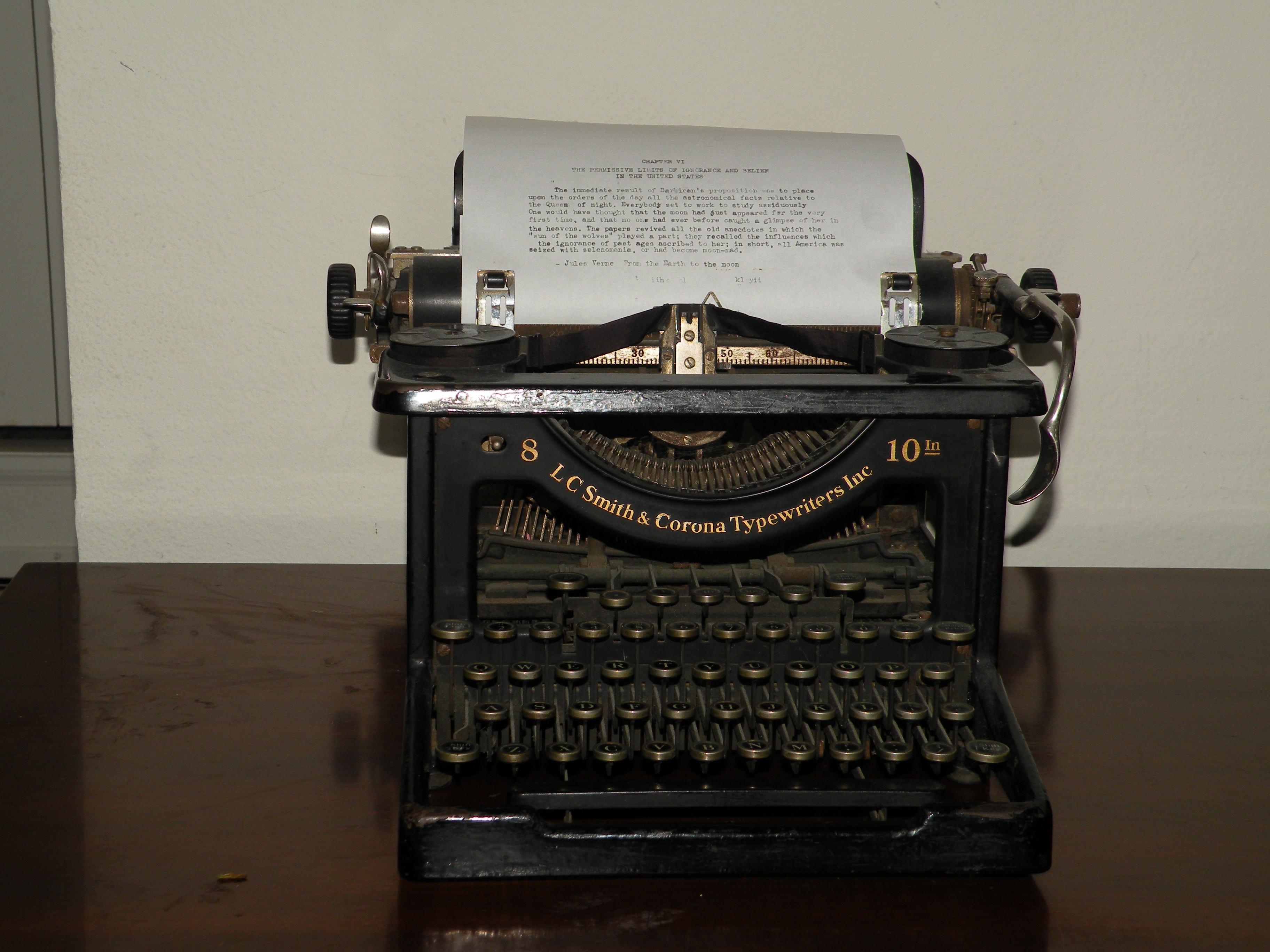
There is nothing to writing. All you do is sit down at a typewriter and bleed. – Ernest Hemingway
These are only two quotes, however I have shared them with a few writers recently who found them helpful.
So if you are in the middle of using some other writers’ notes or methods and are getting nowhere, just stop. Stop spinning your wheels, consider it your first draft, and begin anew, taking from it the most valuable experience of all: the writing part.
I love writing. But I also hate it, at times. This love, hate, rough and tumble Dr Jekyll and Mr Hyde attitude should come as no surprise to writers. Some days you are full of inspiration. Other days, well, you come to the keyboard and grumble, knowing you would feel too guilty not to write and completely uninspired to do it.
So let’s hammer out some ways to get through these shenanigans and write, shall we?
1.) Act it out. This may sound silly, and I’m not talking about performing your own personal flash mob, especially if it is a subway ride with no pants. Perhaps, do it in the confines of your own home. This might help you to understand how to begin. If your character is waking up, take a nap and keep the notepad by your side to collect your hazy thoughts when you do the same.
2.) Outline the chapter and or scene. I strongly encourage this. It could show you how you need to begin.
3.) Cut the scene out. I recently talked with a friend about his novel. He wrote most of his story but had one scene that he struggled with. He was not sure what to do or how to write it. Then as he was talking about it, he looked away imagining it in his minds’ eye then he said, “Wait, what if I don’t write it?” It was not essential to his story and he was able to move on with his novel.
4.) Talk it through with a writing buddy. They might help you through it, give you new ideas, or tell you why it needs to be deleted.
5.) Write it.Seems too simple, doesn’t it? Well if none of the above work, try it. Sit down and promise yourself not to move until you’ve written at least three hundred words.
Have you had this issue before? Was there a chapter or scene in your novel or play that proved especially difficult? How did you get through it?
Ideas from novels can arrive from anywhere. They can come from reading, lectures, true life experiences, or anywhere. I’d like to share the two sparks that started my novel below.
If I’m honest, my first novel began a long time before I had a desire to write. The first moment of inspiration came when I was throwing a softball around in preparation for a softball game at my parent’s church.
It was a magnificent day like most Michigan summer days. A slight breeze was in the air. It was not too hot or too cold, just perfect. No one mentioned the weather. I had no clue that it might change and I get the feeling none of my team members who tossed the ball around with me had an inclination of what was to come.
In what seemed like less than an instant the sky was dark, then from beyond the horizon of tall maple trees came a deafening roar. It was the sound of gallons of rain drops falling from the blackened clouds above. Lightning forked across the sky and I ran and dove into my car just as the immense rain drops clattered on pavement and pummeled my car with such force I thought it was hail. I imagined what it would have been like were there no cover at all and how the cold heavy drops would have felt had they pummeled me instead of my trusty Chevy Cavalier.
This sudden unannounced storm would be the first ingredient that would ignite my novel.
I picked it up and immediately I was hooked. As I read, I came to a part where Mr. Cahill talked about the viking raids on monasteries in Ireland and the surrounding countries. It sounded terrible. I imagined the monks in the sack cloth robes gardening in the beautiful summer morning. Then just as the change of the weather I experienced a few years before, the countryside would be filled with enemies that rushed forward from the undergrowth and cut down everyone in the monastery.
When thinking back on my first novel, The Tale of Calelleth, I realize that there are many things that formulated the novel in my mind. These are the first two experiences that I can remember that cemented the idea of an enemy showing up unannounced. It has since changed from a faceless pure evil to something more complicated, but the storm and Mr. Cahill’s book forever impressed upon my mind the idea of this horror that some in the tangled history of the planet had to live through. They had no refuge as I did in my Chevy Cavalier.
So how about you, reader? Are there any particular experiences or things that you have read that were the seeds to a novel you are now working on?


 PART-TIME NOVEL