The start of something new can be invigorating. Whether it is a new beginning at college, a marriage or a move, there are moments in life that leave us full of energy and full of joy, thinking we might literally fly or perhaps, merely climb Everest.
I have felt like that many times with my writing too.That I could sit down and work through the night. My novel would be done and I can move onto the next project I have swirling in my mind. I admire Conan Doyle’s Sherlock Holmes for his unquenchable energy and vigor or the characters in Jules Verne’s stories or the pace at which Dickens can lay down a story for the simple fact that their prose can move so ferociously fast and be so strikingly precise that you cannot help but be swept along by their current.
But what happens when your mind is not abuzz with ideas? When you are trying to drill down for water that just isn’t there to quench your parched aesthetic tongue? Can you simply pick yourself up by your bootstraps and march on? Not if your boots have been stolen.
So how do you continue writing during the dry times, whether in life or in the writing process? How are you encouraged to press and get to your writing implement to churn out more of your novel?
I am a list maker. I live and die by them at home and at work. Sometimes I get sidetracked and provided that the lists do not get lost, they are essential to me to obtain measurable progress and complete tasks.
This translates to writing as well. I jot down ideas for blogs, stories, tangents, and the like to finish later. If I did not, I am sure the stoke of genius (or so I think!) would rush out of my mind just as fast as it invaded. So for me to be a successful writer at this stage of life I have to plan and be intentional. I have to fight for time to write. If I do not it gets crowded out.
This made me think (and perhaps you can do this along with me) about what makes me successful in my writing? Would it be allowing a jolt of inspiration to come tingling into my mind while I least suspected it and then feverishly scratching it on paper, the laptop or any device that spits out sentences? Or rationing out time every day at the same time to plod along, however dull and uninspiring that might seem.
So how about you? Are you better at waiting for the stroke of genius to come, then churning out fifty pages? Or are you better suited to write two pages a day, every day, until your novel is completed? My suspicion is that when you evaluate the structure of your daily life, or lack there of, you will have your answer.
As I was creating a spreadsheet of various agents to contact I came across a few things that surprised me. I would like to share them with you. If you have started the query process please post any helpful websites or information you discovered, thanks!
Not this sort of agent, though they might help…
I discovered most of the contact information for various agencies usingAgentQuery.coma splendid site. Simply selected the type of novel you are writing and follow the directions. I do not count myself a detail oriented person but even I, who am as easily distracted as a house cat, can be sure to find an agent or two to submit a query or chapters. The marvelous thing about AgentQuery is that they tell you if a particular agent is open to submissions and if they accept email queries to speed up the submission process and target agents who want to hear from writers now.
The first thing I need to finish is my query, but some agencies want a variety of items. Some just want a query, others want a query and a bio, more want a query a bio and a few sample chapters, and even more wanted a query a bio and fifty pages of your novel sent. Once I get a list of about fifty or so, I will begin putting the queries and chapters each agency requires.
The submission guidelines are relatively easy to locate, just click the link in Agentquery to access a particular agent and click on their submission guidelines. I was surprised how easy it is to submit the required information. Most encourage new writers with open arms and even tell you ways to interact with them so they can get to know you as you submit your work.
Another nugget of assistance was discovered on an agency websiteThe Knight Agency. They listed information on how to write a proposal, query, and how to make your work stand out. I was also happy to discover most agents provide helpful tips on many things like query letters, tell you how to get through spam filters and why disqualifies most authors, besides poor writing.
How about you? Are you are the submission process yet? What is your plan of action?
I have a lot of ideas for books. I keep them stashed away in piles of notebooks or if I get a flash of a scene in my mind I write it down and save it in a file on my computer. I’ve never had an issue with ideas or better stated the problem of the creative well running dry.
My issue, like most of you out there, is finding ways to revitalize my creativity, or better yet fueling my creativity.
There is a difference between inspiration and motivation. I find that in my writing life they are often clashing like land and wave, warring against one another. Which made me wonder, what puts me in the writing mood?
Reading – This is obvious, I know. I think the key here is not pulling out War and Peace by Tolstoy because for me that is a work to savor and study. It should be something with great language and pace, anything by Dickens, Rowling, Lewis, and the like. Once I hear a voice of a particular author in their writing it helps me jump back into mine.
Quiet Time – When I can steal some time for myself to merely think and gain perspective instead of being a human machine fulfilling task after task it helps me take a breath, relax, and refocus. This time is best in the mornings and late at night when my wife and children are in bed. Also, there is a park nearby my work that is wooded with walking trails and a nice vigorous walk awakens the writer in me.
Reading Blogs – I follow several blogs and many of them are located on my blogroll. Being involved in the writing community is important, and hearing what my cyber writing friends have to say is always beneficial. Also, seeing people putting up content constantly is a friendly rub of motivation to get out there and produce myself.
Talking with Other Writers – I have a scheduled night each week that I use for writing, though it changes from time to time, it is nice to meet regularly with Josh. Also, when I catch up with fellow Weaklings, Andrew and Matthew, it’s helpful as well.
Reading Books on Writing – When you are trying to do anything in life, travel across Europe, buying a car, starting a degree, it is always good to read books by people who have accomplished it. It reveals that finishing is possible, and perhaps some insightful tips along the way.
Sherlock Holmes 2: A Game of Shadows
But what about you writer? What have you done lately that has put you into the writing mood? Because, if you are searching for motivation, you should probably do that before getting to your writing device.
I love writing. But I also hate it, at times. This love, hate, rough and tumble Dr Jekyll and Mr Hyde attitude should come as no surprise to writers. Some days you are full of inspiration. Other days, well, you come to the keyboard and grumble, knowing you would feel too guilty not to write and completely uninspired to do it.
So let’s hammer out some ways to get through these shenanigans and write, shall we?
1.) Act it out. This may sound silly, and I’m not talking about performing your own personal flash mob, especially if it is a subway ride with no pants. Perhaps, do it in the confines of your own home. This might help you to understand how to begin. If your character is waking up, take a nap and keep the notepad by your side to collect your hazy thoughts when you do the same.
2.) Outline the chapter and or scene. I strongly encourage this. It could show you how you need to begin.
3.) Cut the scene out. I recently talked with a friend about his novel. He wrote most of his story but had one scene that he struggled with. He was not sure what to do or how to write it. Then as he was talking about it, he looked away imagining it in his minds’ eye then he said, “Wait, what if I don’t write it?” It was not essential to his story and he was able to move on with his novel.
4.) Talk it through with a writing buddy. They might help you through it, give you new ideas, or tell you why it needs to be deleted.
5.) Write it.Seems too simple, doesn’t it? Well if none of the above work, try it. Sit down and promise yourself not to move until you’ve written at least three hundred words.
Have you had this issue before? Was there a chapter or scene in your novel or play that proved especially difficult? How did you get through it?
Σίσυφος, or Sisyphus, was a character of ancient Greek mythology. He was a king of old and a tricky, scheming, knavish one at that. He was so good at fooling the gods, he even cheated them out of death. Finally, Zeus and the other Greek gods had enough and condemned him. For all eternity Sisyphus was cursed, forced to push an immense boulder up a hill. This may not seem to be that bad, however the gods added their own Sisyphusian twist. Just before he reached the top of the hill, before he was able to rest and be at ease, the boulder would wobble and fight against him, until it was happily rolling back to level ground. Then, he’d climb down after it and begin the process all over again.
Writing can be like this. We struggle and toil at our own little schemes we have created. At times we have progressed and have momentum and may very well reach our goal. There are those other times, however, when we see our novel, poem, or novelette, back down at the bottom of our artistic hill.
Is it worth it? Yes! But also, no.
Sometimes it is a long period of writing and deleting, rewriting and writing again. We may be fooling ourselves that we will ever reach the top.
Lately, I have been focusing my efforts into my own final push. I know that as I race to finish this present draft before the end of the year, that, as the calendar turns its page, I will once again be at the bottom of the hill looking upwards at yet another draft. You may think that, like Sisyphus, another trip to the top may not be worth it. As a writer writing about the writing life, I submit that is all we can do. And, though we have yet to reach the top, we know we are closer to our goal having finished a draft, than if we had never started in the first place.
Four years ago, I was taking the Metro from the Minneapolis/Saint Paul airport to downtown Minneapolis for a conference for work. The train car I was riding in was full, as many people were returning home from a busy days work and, though we passed sights like theMetrodome, Minnehaha park, and columns of tall important buildings, I saw none of them. I simply could not pull my eyes away from the words I had just read inThe Art of Fictionby John Gardner. I had, what many artists might call, a breakthrough.
I struggle with my work you see. Though I have read much about Tolkien and his “sub-creation”, I had yet to discover the joy of telling a goodmyth. I had the impression that the word “fantasy” was synonymous with escapism, which many authors would say is true.
I have read many books about the craft of writing. In them, nearly all of the authors consider fantasy rubbish. The unfortunate reality about reading their take on literature and writing style is that you tend to respect what they say since they are accomplished; they “made it”.
The problem I had was that I was (and am) writing fantasy. At the time (and I do have relapses now and again) I maintained a passive-aggressive love-hate relationship with my novel. I knew the story had to be told and the characters begged me to continue. They wanted to live, and I wanted them to live. I just did not want my work to turn into one of those novels you see in the “free” bin outsidesecondhand shops. You know, the guy has a bare chest, rippling muscles, has one hand around a chain that connects to the collar of a snow leopard, and his other arm wrapped around the waist of the same old voluptuous girl you see on the cover of many fantasy stories. Yes, in other words, recycled trash, or escapism.
The solution, or breakthrough, where I was finally at peace about writing fantasy is when I read about what a fantasy actually could be. John Gardner was a man some considered a literary genius, and I was thrilled to find an explanation of a fantasy or tale in his distinguished book. Here is what I came across.
The setting of a tale is customarily remote in either time or space or both…The landscape of a tale is of a kind likely to inspire the reader’s wonder–lonely moors, sunny meadows, wild mountains, dark forests, desolate seacoasts–and both natural and made-made features of the setting are frequently of great age…the principle of causality in a tale is psychological and morally expressionistic, or poetic… (Gardner, The Art of Fiction Pg 72-73).
So therein lies the high aim of fantasy, and my novel, per Gardner’s take. Inspiration to fill the reader with wonder in the form of a poetic story. If a fantasy or tale is written like this, it could hardly be considered literary trash. Thanks Mr. Gardner.
For us part timers, writing can be something that gets pushed aside and otherwise edited out of our busy schedules. I believe it is detrimental to the survival of our stories to both develop habits that advance us as story tellers (250 words a day?) and also have reminders set up around our house or work space that help us focus our minds on the task of writing. You know what I mean. All of a sudden, a month goes by and you are struck with a horrifying thought. I’ve only written about 50 words! Below are a few things that I have placed around my apartment to remind me of my goal everyday, no matter how busy my schedule can become. Welcome to my world.
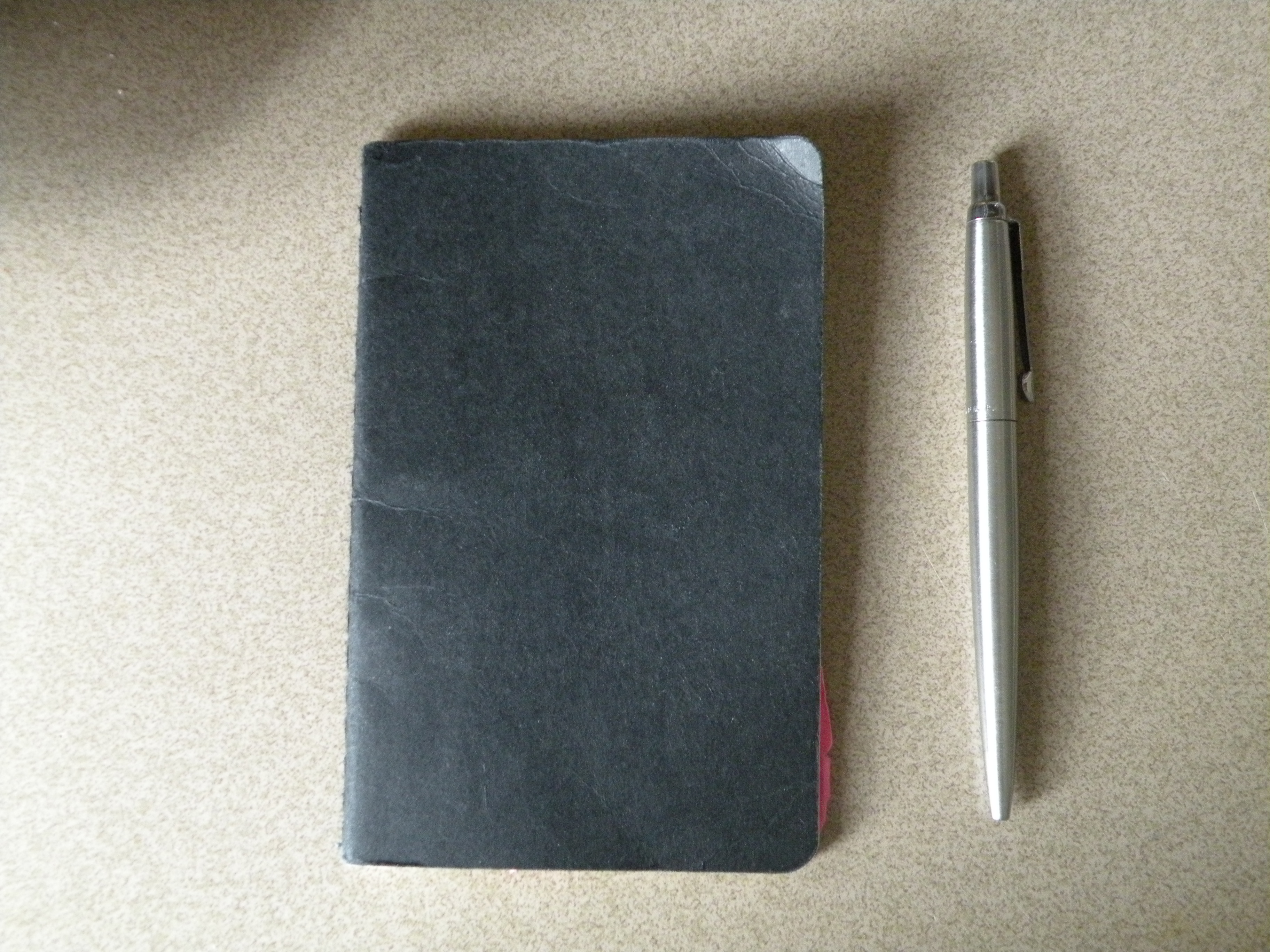
First and foremost. My Moleskine journal and Parker Pen. These go with me everywhere and I’ve went through several. No matter if its the grocery store, a traffic jam, or a walk to the mailbox, I have a place to write down ideas when they strike or when I have a spare moment.
Okay, I am not trying to point out the obvious here, but this one should come as no surprise to any of you. Bookshelves filled with books. If this is not a given when pondering what inspires you to write I don’t know what is. After all, you are trying to write one of these.
If you did not already think I was a nerd, here is, once again, an obvious clue that I am one. I keep a collection of words in the back of my journals -complete with definitions- so as to expand my vocabulary. Not quite as fancy as laminated flash cards, but they do the trick. I collect expressions that hit a mood perfectly, and words I either do not know or have never thought of using before.
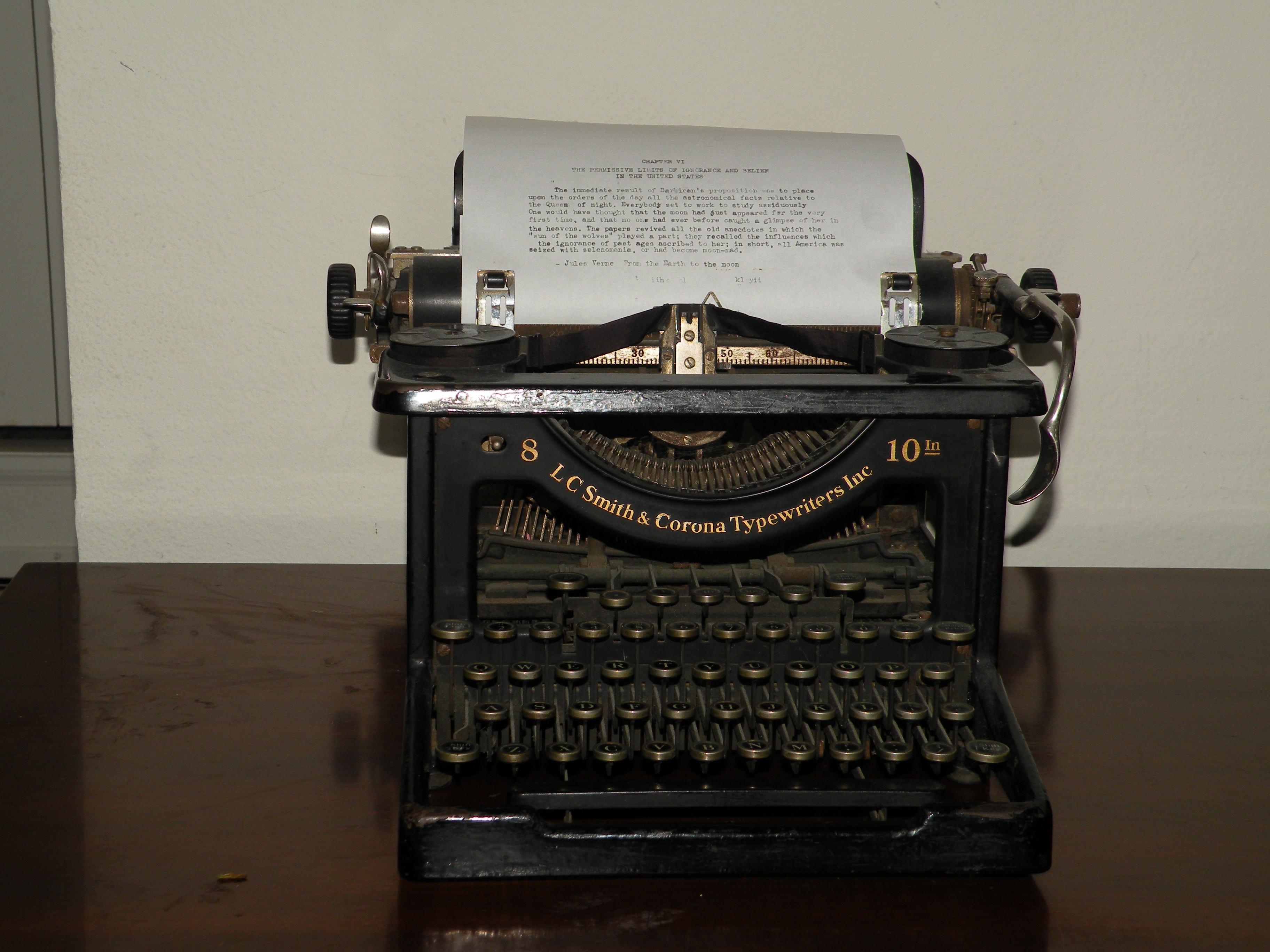
This next picture is of my L.C. Smith & Corona Typewriter. I see it everyday as it sits on my dresser with a paragraph from Jules Verne’s From the Earth to the Moon.This behemoth weighs about 40lbs. You may think, “Why would you keep a cast iron typewriter around?” My response, “Does cool need a reason?”. It is also another reminder of what I want to do.
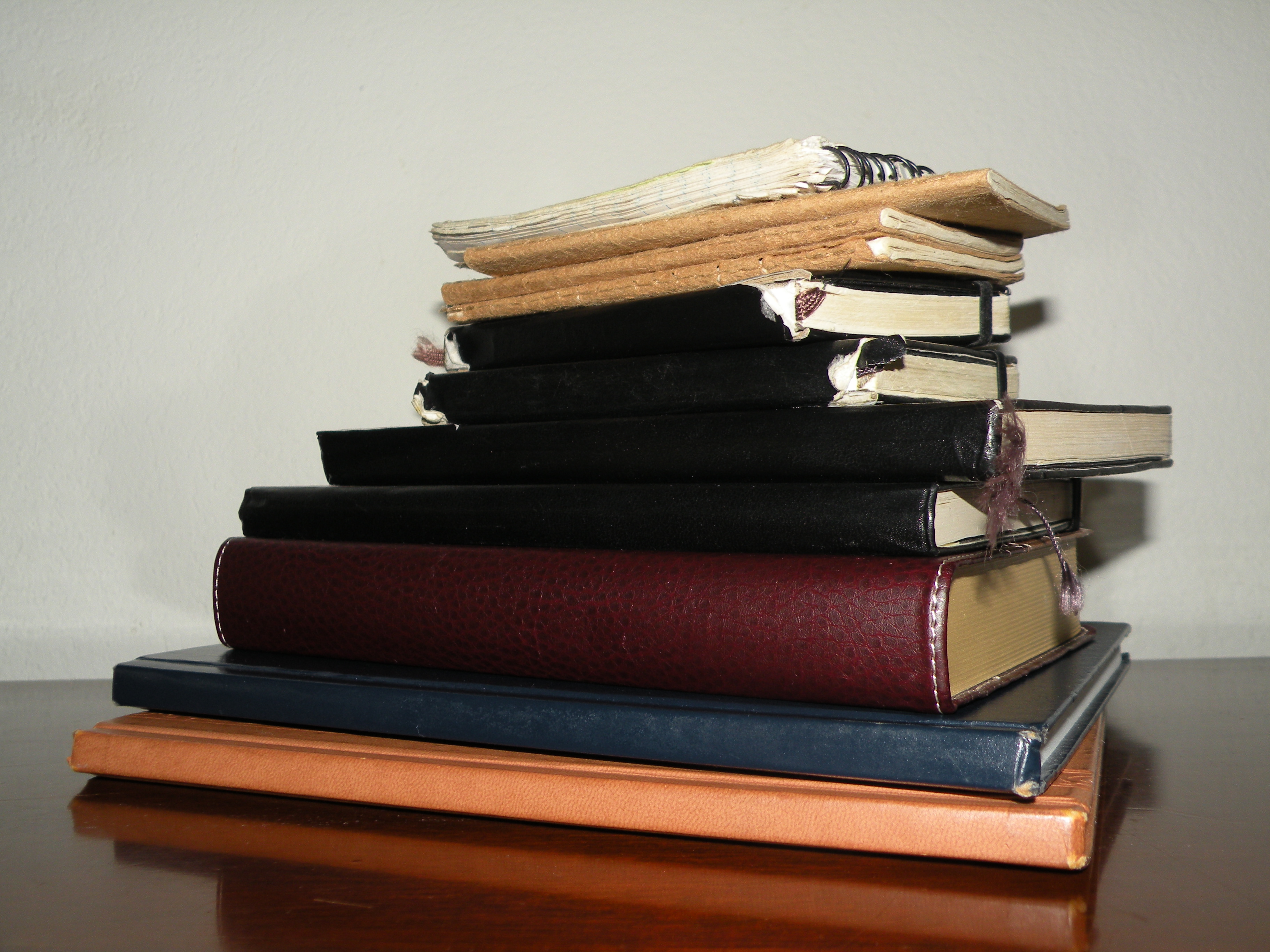
Journals. I CANNOT stress enough how important it is to journal. Not just about writing, but about life. These particular journals span my college years to now (10 years). I hope to be able to keep going. It is tremendously satisfying to finish one. Also, if you are going to start a journal, remember to date your entries.
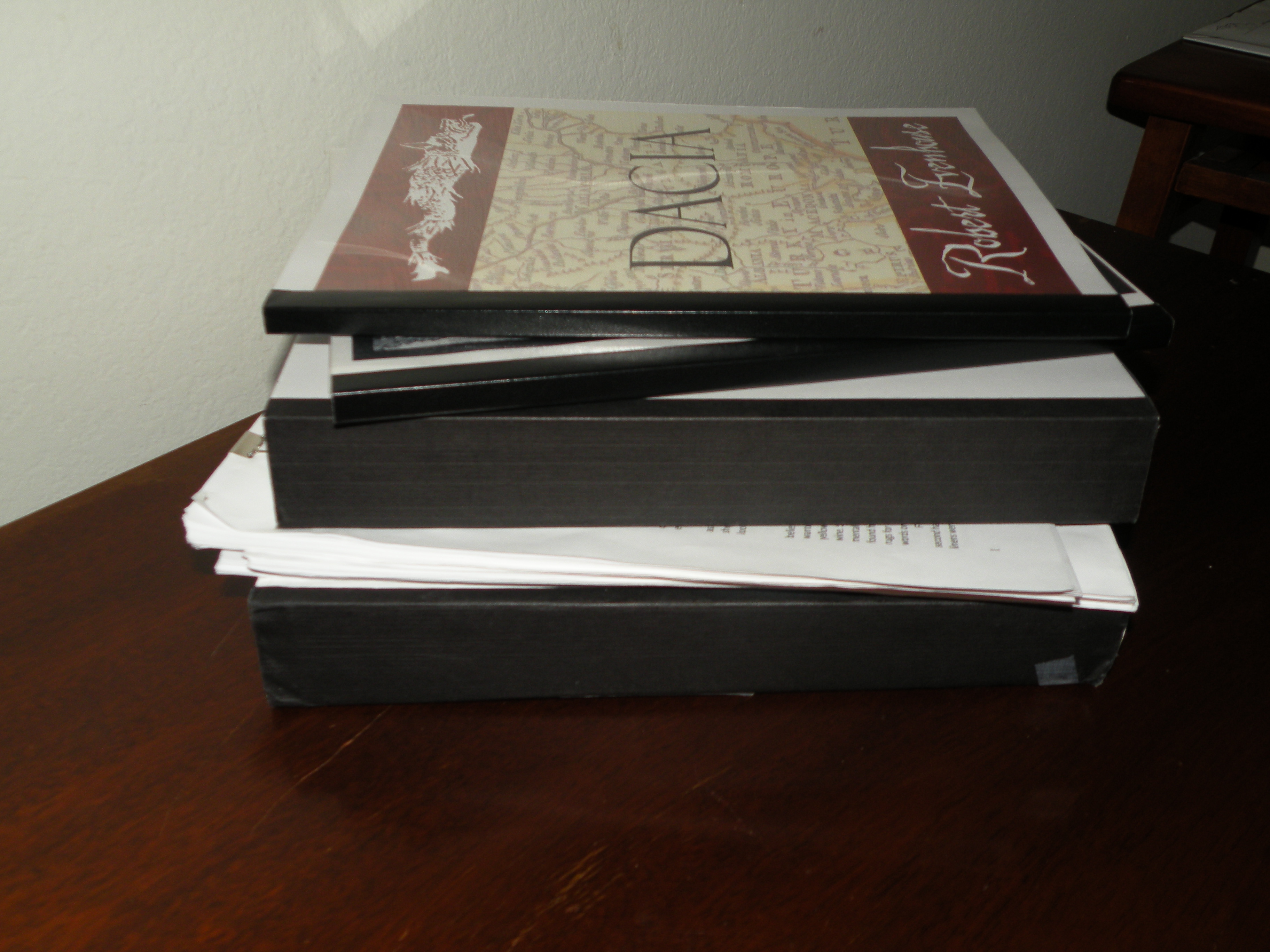
Ah, now these are things to be proud of. Here are books I have written. Some are novelettes (25,000 words or less) and my current novel (89,000+ words). I have my wife, writers group, and many many friends to thank for their completion.I am grateful to you all.
Ever wonder how a chapter takes form? Does it come out cleanly like a white shirt in a Tide commercial? No, no, no, and emphatically no. Most of the time its fools gold with bits of gold hidden inside. But its nice to have a place to organize it all beside my forgetful mind. This sits on the wall, right by my bed, so I will remember every night before I go to sleep that I am writing a novel.
So there’s a little insight into my writing life. I hope this can inspire you to get a notebook to always keep with you, a poster board from your local grocery store to start outlining, or to purchase a journal to help remember important life events. Writing is a thrilling thing, however fickle it can be.
Last fall, one of my friends in my writer’s group told me he was trying to read 40 books in a year. That inspired me to do the same this year. I tried to add some variation so as to not become complacent in my reading. This survey has taken me from popular books like The Hunger Games, classics like Of Mice and Men, to the poetry of A.E Houseman, and finally to this book,Tolkien Man and Myth A Literary Life by Joseph Pearce, which is a thorough study of J.R.R. Tolkien and the famous writing group the Inklings. It also centers around the idea of “myth” in the Tolkien sense. Here is what Pearce has to say about the idea of myth in the preface:
“For most modern critics a myth is merely another word for a lie or a falsehood, something which is intrinsically not true. For Tolkien, myth had virtually the opposite meaning. It was the only way that certain transcendent truths could be expressed in intelligible form,” (Pearce, XIII).
I would even go as far as to say myths validate other truths like, fathers should be good, rulers should be stewards and not tyrants of their people, and that individuals should not put limits on following what is right and good – can be best expressed in fiction. The reason is, when we see something as it should be in reality we immediately become suspicious. “They must have dark secrets they keep well hidden,” some may say. “They cannot actually enjoy being a father, or a husband, they are waiting for the right time to bolt,”. However, if you show the very same thing in a story of fiction or “myth”, we can believe it.
Indeed, I am writing fiction and cannot help but think that, although I am not moving into the realm of allegory, the reason we writers write is important. There is usually something being said about something even in the simplest of stories. Even if you did not deliberately mean to, and I can say that I certainly did not start out with philosophical underpinnings, you find as you step back and get outside of your work, you are not just writing about people, but significant things of the human experience. If I were to examine my own writing it would be obviously about revenge, and the importance of remembering history so as not to repeat it, and lastly, and more subtly, forgiveness in the profound sense.
Understanding what you write and why you write may not be significant to you. However, I find it helpful to always be orienting myself to my story, and where my characters are going and what sort of “myths” I am telling. Critics are always going to be looking for themes, and they genuinely sprout up along the way, it might be good to identify them as you work out your stories.
Novel/ Family Update:
On September 24th at 11:48am, Clara Mae was born, my second daughter. Some writers out there might be lamenting the fact that my time to write may be obliterated for the next few months (that very well could be true) and the novel I wished to finish may now be on a permanent hold. Not so. In fact, I don’t think I would have the idea for the next chapter in my book had I not visited the hospital. This lends to my suspicion that as the deepness of life grows (college, marriage, family, etc.) the more your well of creativity is stretched wider and is able to be filled with even more life, enabling the writer to draw from more experiences to be better equipped to share their magnificent stories.
When a writer says, “I just can’t find the groove,” anyone who has every written a novel, short story, or article of any sort knows exactly what they are talking about. It has been called many things: rhythm, pulse, tempo – whatever it is that keeps the writer moving, keeps their fingers to the keyboard or pen to the page in a way that is both satisfying and liberating. It flows, like waters breaking through a dam, surging, cascading, dancing all over the countryside in your mind. It is the culmination of your idea, your story, your characters, your plot, your unequivocal love for language, unleashed.
Unfortunately, for me, and perhaps for you, it is a hard thing to find. Writing time has the tendency to evaporate, and there are only so many mornings you can force yourself out of the bed in the wee hours before the thrill of your tale becomes dull. It is no longer easy. It is no longer joyful. If there was a surge of ideas somewhere in your being you lost the key to that place a long, long time ago. I think it is okay to admit this. It is alright to say that you are in a rut. It is not writers block that I am talking about, I am talking about a loss of energy or gumption and, it might be shameful to admit, desire.
You may find, as I have, that releasing these thoughts to a journal or blog can very well be a way through all of this. Just to have gained traction in any sort of writing, helps, and it helps a lot. It is like stretching your muscles before a game, or going over note cards before a test. It puts you in a mode. It prepares you for the mental battle.
It is important to understand how we work, and more importantly how we can overcome these stoppages in our work. For me, its just to find some way to continue the writing process. For you it might not be writing but reading something different than what you normally read or going through thewriter, Writer’s Digest, Poet’s & Writers, or some other writing magazine or book to be inspired. Or it could be filling your creativity well by doing what the Artist’s Way by Julie Cameron instructs, by taking yourself on a writer’s date. Whatever it is, find it. Meet head on. Battle through it, keep going, keep moving, keep your story pressing on and don’t give up. It may be, just as you thought you were at the end of your story, you burst through the clouds and find yourself in the glorious light of another finished page.
 The start of something new can be invigorating. Whether it is a new beginning at college, a marriage or a move, there are moments in life that leave us full of energy and full of joy, thinking we might literally fly or perhaps, merely climb Everest.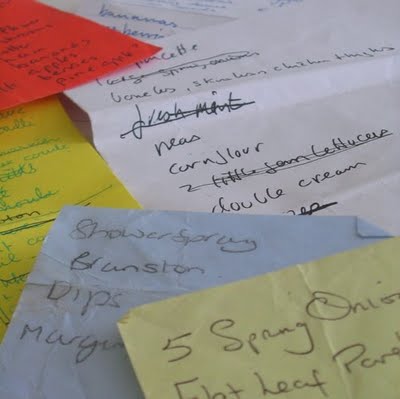






 PART-TIME NOVEL